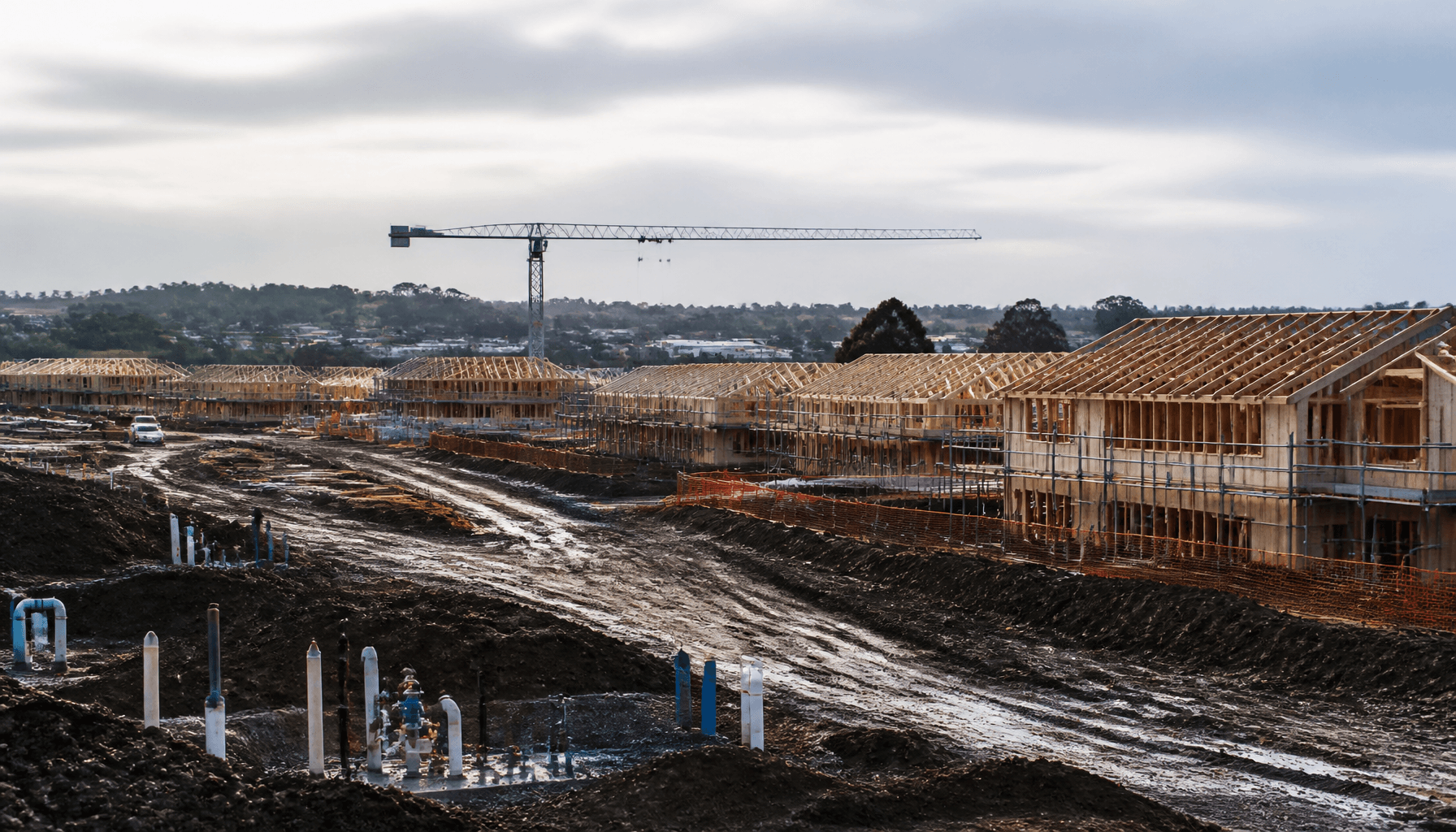
Budget 2026 balances fiscal restraint with $5.7bn capital surge
New Zealand will deliver Budget 2026 on 28 May with a $2.1 billion operating package and $5.7 billion capital boost, signalling a pivot toward infrastructure and defence spending even as the Government pursues a return to surplus by 2028/29.
Auckland’s potential $5 billion Fast-track infrastructure exposure and 16,270 wrongly suspended Winter Energy Payments have become the first real-world stress tests of the Regulatory Standards Act 2025.
Cabinet’s Economic Policy Committee has formally authorised public consultation on a prudential levy to shift Reserve Bank supervision costs onto banks, insurers and market infrastructure operators from 2027/28.
Cabinet has agreed in principle to three shifts in public performance reporting sought by the Finance and Expenditure Committee, while parking detailed design and costings until 2027.
Finance Minister Nicola Willis will deliver Budget 2026 on 28 May 2026 with a constrained operating allowance of $2.1 billion—some $300 million below the $2.4 billion baseline set in December 2025—but a significantly expanded capital package of $5.7 billion, up from a prior $3.5 billion allowance.
The $2.2 billion uplift to capital spending will flow toward defence capability, energy security, and infrastructure, with targeted boosts to schools and hospitals. Prime Minister Christopher Luxon framed the approach on 13 May as "securing New Zealand's future in a more volatile world," balancing fiscal discipline with resilience investments in response to global volatility triggered by the Iran conflict and resulting fuel crisis.
Treasury reopens the forecasts
Treasury reopened its economic forecasts five weeks before Budget delivery to incorporate fuel crisis impacts. The Half Year Economic and Fiscal Update (HYEFU) 2025 projected an operating balance before gains and losses excluding ACC (OBEGALx) deficit of $13.9 billion for 2025/26, narrowing to $10.4 billion in 2026/27. Westpac's Budget preview flagged that the cumulative OBEGALx deficit over the forecast period could deteriorate by around $8 billion due to weaker near-term growth from elevated oil prices.
Securing New Zealand's future in a more volatile world. — Prime Minister Christopher Luxon, pre-Budget speech, 13 May 2026
Net core Crown debt stood at $184.3 billion or 41.9 per cent of GDP as at 31 January 2026, according to the Treasury's Interim Financial Statements. Forecasts show debt peaking near 46.9–48 per cent of GDP in 2027/28 or 2028/29 before declining toward a 40 per cent target. The Government has achieved public service savings for three consecutive years to enable the reduced operating package, signalling continued emphasis on departmental efficiency.
Source: Treasury Half Year Economic and Fiscal Update 2025; Westpac Budget 2026 Preview
Fuel crisis provisions and health capital
The fuel crisis has required provisioning for potential price spikes in fuel, plastics and other inputs. A pre-Budget announcement allocated $15.5 million for a nationally consistent specialist paediatric palliative care service, illustrating how health capacity pressures are being addressed within the capital envelope.
New public health and education infrastructure — exactly the category of capital spending targeted by Budget 2026's $5.7 billion package. Auckland Medical School new build. Uploader. · Public domain · Wikimedia Commons
Core Crown expenses as a percentage of GDP are projected to decline from 32.8 per cent in 2025/26 under HYEFU forecasts, reflecting the operating restraint. The capital boost will test borrowing requirements, with analysts watching whether higher debt servicing costs could crowd out private investment or pressure interest rates.
The approach aligns with classical fiscal discipline—tightening current spending while ring-fencing capital for productivity-enhancing infrastructure—but the scale of capital borrowing remains contested among economists.
Surplus path and market signals
The Budget cycle demonstrates how global shocks force iterative adjustment to fiscal strategy. The Government's commitment to return to OBEGALx surplus by 2028/29 depends on sustained revenue growth and continued departmental savings, both sensitive to economic conditions beyond ministerial control. Market reactions have been watchful, with bond yields reflecting expectations of sustained borrowing needs over the forecast horizon.