Budget 2026 sets aside $48 million for gas transition loan guarantees
The Coalition Government will allocate $48 million in Budget 2026 for a Gas Transition Loan Guarantee Scheme under which the Crown guarantees 80 percent of qualifying loans to encourage businesses to switch from natural gas to electricity or bioenergy.
New Zealand's repeated swings between banning and reviving offshore oil and gas exploration have left Taranaki with falling gas reserves, an industrial exit, and new taxpayer commitments through the Gas Security Fund.
Seventy-seven percent of accountants in a recent survey flagged the 15 January deadline for provisional tax and GST payments as particularly challenging for clients.
Auckland’s potential $5 billion Fast-track infrastructure exposure and 16,270 wrongly suspended Winter Energy Payments have become the first real-world stress tests of the Regulatory Standards Act 2025.
The Coalition Government will allocate $48 million in Budget 2026 for a Gas Transition Loan Guarantee Scheme under which the Crown guarantees 80 percent of qualifying loans to encourage businesses to switch from natural gas to electricity or bioenergy.
The initiative also includes legislation to increase transparency on gas supply and demand.
New Zealand's natural gas 2P reserves stood at 731 PJ as of 1 January 2026, according to MBIE data released in May 2026. This figure represents a 23 percent decline from the previous year and marks the lowest level since records began 20 years ago.
Of the 217 PJ drop, 108 PJ resulted from production and 109 PJ from downward revisions by operators.
Expected 2026 production has been revised down to 85 PJ, 15 percent below the profile submitted a year earlier.
Previous forecasts had annual production falling below 100 PJ by 2029. Revised data now point to this level being reached in 2026.
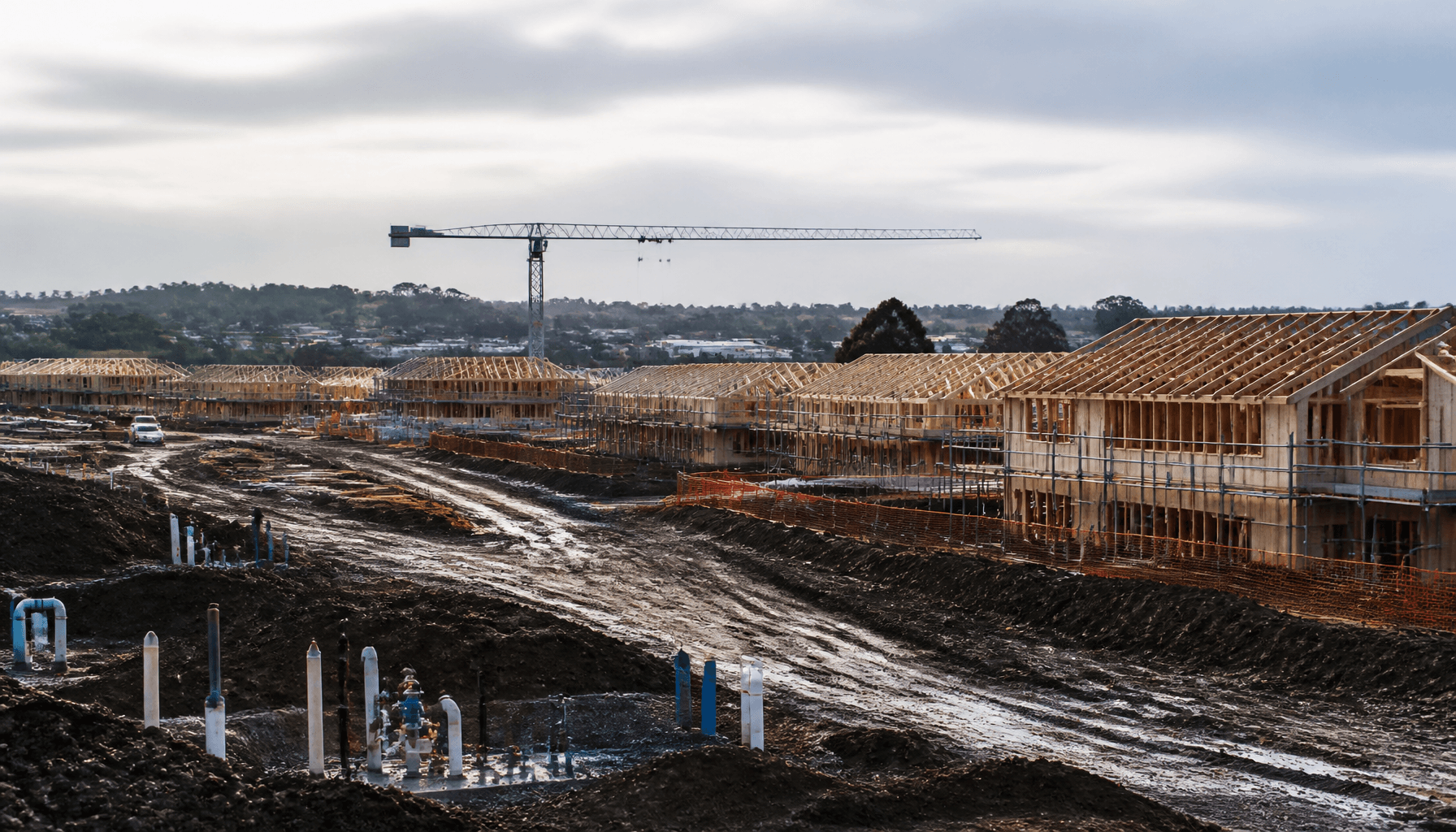
AI illustration of a New Zealand industrial energy transition landscape, used here to illustrate the shift from natural gas to electricity and bioenergy that the Budget 2026 loan guarantee scheme is designed to accelerate.
Gas Reserve Trends
The sharp decline follows an earlier drop. As of 1 January 2025, 2P reserves had fallen 27 percent year-on-year from 1,300 PJ to 948 PJ, driven largely by operator downgrades of 234 PJ.
Production into open-access pipelines had already declined from 136 PJ to 106 PJ over the prior year.
New Zealand natural gas 2P reserves
Reserves have fallen sharply over two consecutive years, reaching a 20-year record low.
Source: MBIE Gas Reserves Reports, May 2025 and May 2026
Fiscal Structure and Risks
The $48 million allocation underwrites the guarantee scheme. Banks will originate the loans, with the Crown taking 80 percent of the risk on qualifying facilities.
Uptake volumes and default rates will determine the ultimate fiscal exposure, which will appear as contingent liabilities in future Treasury updates.
Budget 2025 had already committed $200 million over four years for co-investment in new domestic gas fields.
The Government has also announced plans for an LNG import facility in Taranaki.
Broader Context
The loan scheme forms part of MBIE's Gas Transition Plan, developed with the Gas Industry Company since 2021-22. The plan seeks managed pathways to reduce emissions from fossil gas in line with emissions budgets through 2035.
It sits alongside supply-side measures including repeal of the offshore exploration ban.
Market analysis from PwC highlights tight supply conditions expected in 2027 before LNG volumes stabilise the market.
The PwC study notes indigenous production has more than halved over the past decade, returning to levels last seen in 1983.
Successful switching by industrial and commercial users could ease pressure on remaining supply for electricity generation and households.
Increased electricity demand from switching will require parallel investment in generation and networks.
The transparency legislation will improve market information for the Gas Industry Company, MBIE and participants.
Perspectives
The scheme's demand-side incentive design has drawn broad support, but the supply-side elements of the Government's wider energy package face scrutiny. In its annual economic survey of New Zealand released in May 2026, the OECD warned that several of the Government's energy policies were unlikely to achieve their desired effect, and cautioned that public sponsorship of LNG risked locking in fossil dependence while weakening incentives for alternatives such as biomass, pumped hydro and demand response, according to reporting by Newsroom.
Greenpeace Aotearoa has separately argued that the Government should end new fossil gas connections and prioritise household electrification measures — including heat pumps and solar — over LNG import infrastructure, contending that such measures could deliver comparable energy savings at a fraction of the cost.
Te Waihanga, the New Zealand Infrastructure Commission, has noted in its National Infrastructure Plan that large industrial gas users face higher costs and longer lead times when switching to alternative fuels, and that policy uncertainty continues to weigh on investment decisions across the gas and electricity sectors. It has identified that better gas security-of-supply reporting and stable transition planning can help reduce that uncertainty.
The Government had not responded to requests for comment on the critical perspectives at the time of publication.
Forward Outlook
Over a two-to-five-year horizon, uptake could support energy security ahead of LNG imports while contributing to emissions budget compliance. Crown exposure remains limited by the guarantee structure but will require close monitoring in fiscal updates.