Budget 2026 Operating Allowance Trimmed to $2.1 Billion
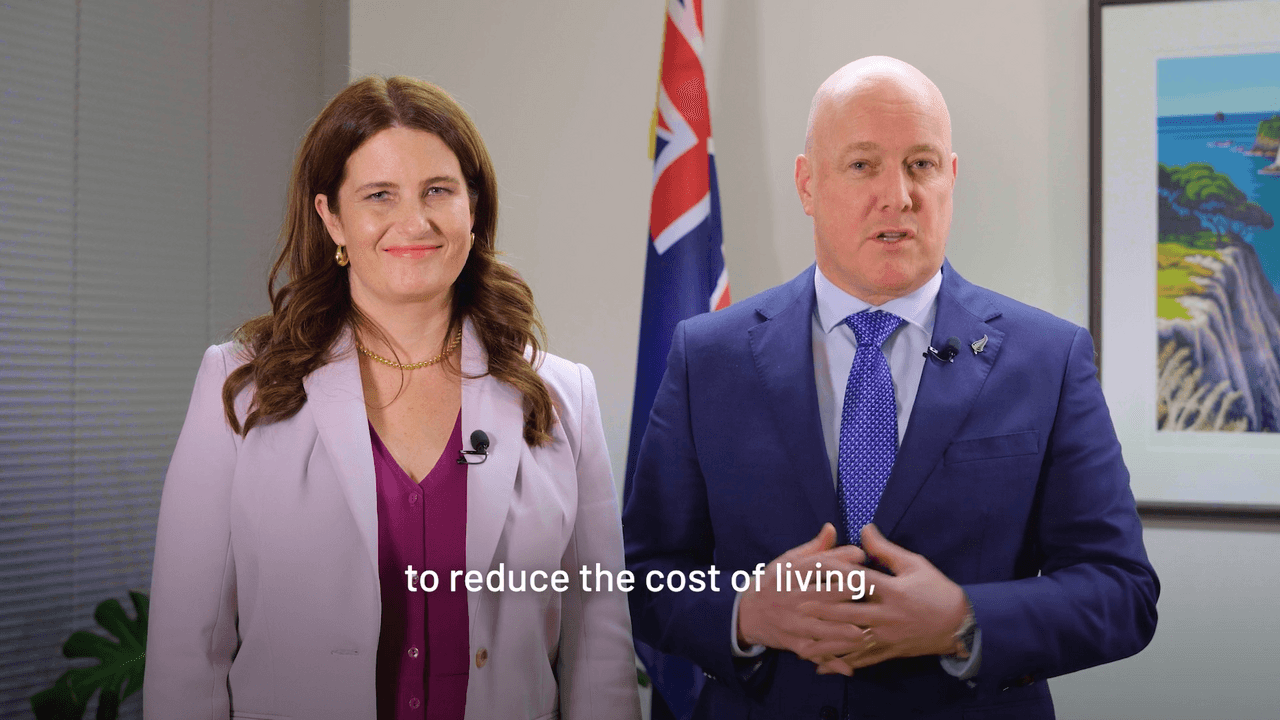
Finance Minister Nicola Willis will deliver Budget 2026 on 28 May with an operating allowance set at $2.1 billion, $300 million below the $2.4 billion level signalled in the December 2025 Budget Policy Statement.
Auckland’s potential $5 billion Fast-track infrastructure exposure and 16,270 wrongly suspended Winter Energy Payments have become the first real-world stress tests of the Regulatory Standards Act 2025.
Cabinet’s Economic Policy Committee has formally authorised public consultation on a prudential levy to shift Reserve Bank supervision costs onto banks, insurers and market infrastructure operators from 2027/28.
Cabinet has agreed in principle to three shifts in public performance reporting sought by the Finance and Expenditure Committee, while parking detailed design and costings until 2027.
Finance Minister Nicola Willis will deliver Budget 2026 on 28 May with an operating allowance set at $2.1 billion, $300 million below the $2.4 billion level signalled in the December 2025 Budget Policy Statement.
This marks the third straight year Willis has reduced the operating allowance below its initial signal. The net capital allowance rises to $5.7 billion.
Prime Minister Christopher Luxon announced the settings on 14 May. He framed the mix as a shift toward productive investment rather than ongoing consumption.
The move leaves limited room for new spending. According to the Budget Policy Statement 2026, after pre-commitments, only about $1 billion per year remains available on average for discretionary initiatives.
The Macro Backdrop: Deficits, Debt and a Long Road Back
Treasury's Half Year Economic and Fiscal Update 2025, released 16 December 2025, shows the OBEGALx deficit reaching $13.9 billion or 3.0 per cent of GDP in the year to June 2026.
Deficits then narrow to $10.4 billion in 2026/27, $5.1 billion in 2027/28 and $0.9 billion in 2028/29 before a $2.3 billion surplus in 2029/30.
OBEGALx Balance Forecast 2025/26–2029/30
Deficit narrows progressively before a modest surplus in 2029/30. Negative values indicate deficit.
Source: Treasury HYEFU 2025, 16 December 2025
Net core Crown debt peaks near 46.9 per cent of GDP in 2027/28 before declining. Core Crown expenses as a share of GDP are projected in HYEFU 2025 to fall toward the 30 per cent target.
The Fuel Crisis Factor
Willis linked the allowance size to the early-2026 fuel crisis. Speaking to RNZ on 14 May 2026, she said:
It is the case that without the fuel crisis, yes, we may have been able to have an even tighter allowance, but my view is that we have achieved a great deal by reducing our forecast operating allowance, ensuring that we're building up buffers for the future, keeping New Zealand financially secure.
The Government's fiscal strategy, set out in the 2025 Fiscal Strategy Report and reaffirmed in the 2026 Budget Policy Statement, targets an OBEGALx surplus by 2028/29 and net debt on a path toward 40 per cent of GDP.
Business and Ratings Agency Support
BusinessNZ chief executive Katherine Rich welcomed the continued emphasis on fiscal discipline and regulatory certainty.
Fitch Ratings reaffirmed a positive outlook on New Zealand's sovereign credit rating in March 2026. It cited the programme of fiscal consolidation as supportive amid global volatility.
Beyond the Numbers: A Leadership Test
The Budget functions less as a traditional spending document and more as a leadership statement. With the next general election due in late 2026, success will be measured by whether the Government articulates a coherent story of disciplined recovery that resonates beyond Wellington.