Cabinet fast-tracks interim gas disclosure rules — Economic News
REGULATION
Cabinet fast-tracks interim gas disclosure as Māui–Methanex timing risk rises
Cabinet has agreed to expedite interim gas market disclosure rules, citing a material risk Methanex exits before full transparency regulations take effect in early 2027.
The New Zealand Treasury published the Investment Decision Assurance Policy on 13 October 2026. The framework consolidates the Gateway reviews and Te Waihanga's Infrastructure Priorities Programme into one investor-focused process effective 1 November 2026.
New Zealand's repeated swings between banning and reviving offshore oil and gas exploration have left Taranaki with falling gas reserves, an industrial exit, and new taxpayer commitments through the Gas Security Fund.
Seventy-seven percent of accountants in a recent survey flagged the 15 January deadline for provisional tax and GST payments as particularly challenging for clients.
Cabinet has agreed to expedite interim gas market disclosure requirements. Ministers acted over a material risk that methanol producer Methanex will exit before full regulations under the Gas (Market Transparency) Amendment Act 2026 take effect early next year.
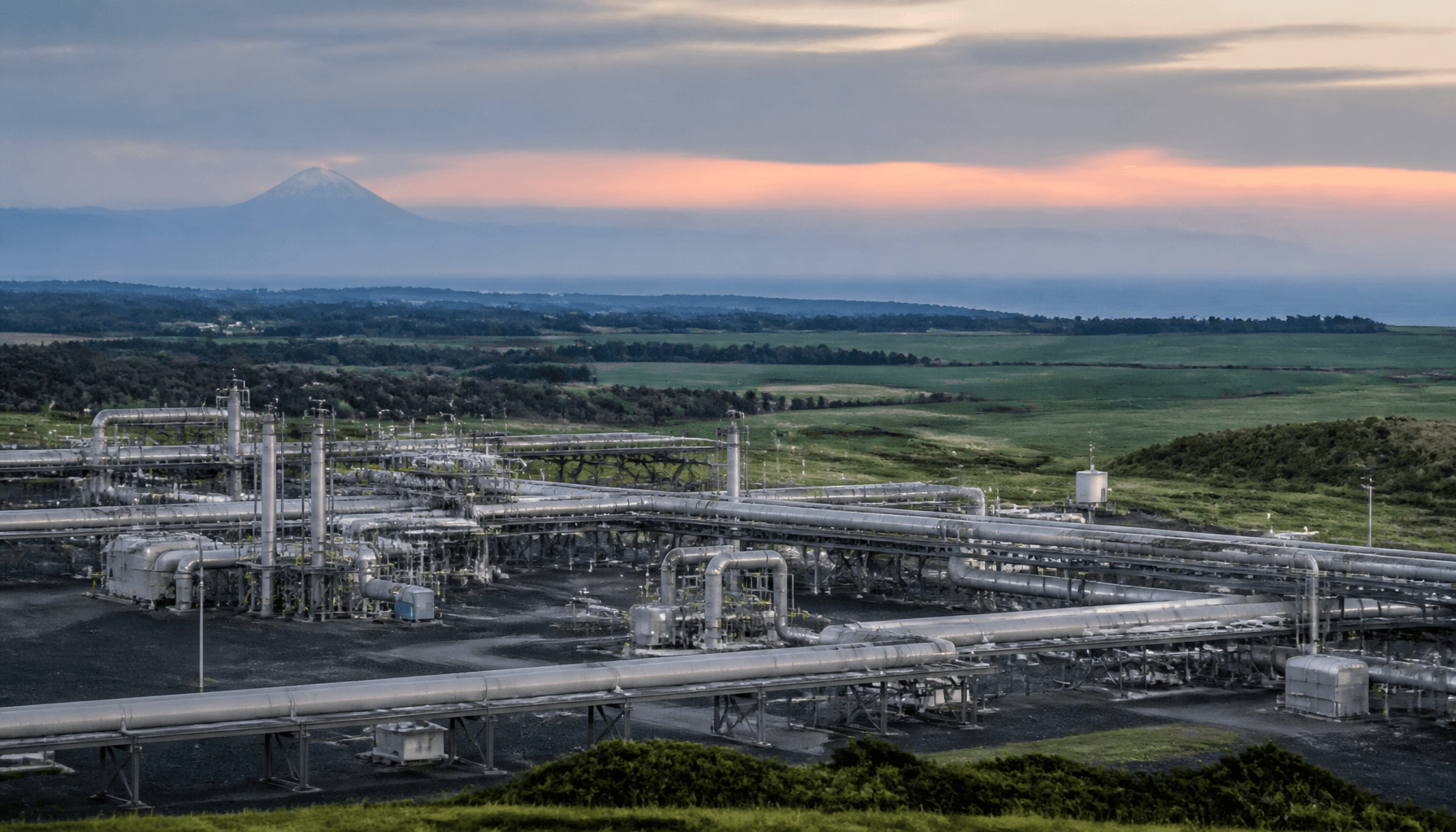
Methanex accounts for roughly 40 percent of national gas use. Its Taranaki operations depend heavily on the ageing Māui field. Operator OMV New Zealand has formally notified the government and regulators that Māui is expected to cease production by the end of 2026.
Methanex has said it cannot keep running its New Zealand plants once Māui gas ends. The company earlier wrote its New Zealand cash-generating unit to a recoverable amount of nil, booking a US$71 million non-cash impairment.
Parliament passed the transparency Bill through all stages under urgency in late May 2026. It received Royal Assent on 4 June 2026 as the Gas (Market Transparency) Amendment Act 2026. The Act amends the Gas Act 1992 to allow regulations for the collection and publication of gas market information.
Full secondary regulations were always expected to need further consultation on data fields, frequency, confidentiality and compliance cost. Those rules were due early 2027. The interim package is designed to bridge that gap before the Māui–Methanex transition bites.
NZ gas market snapshot
2P gas reserves
731 PJ
-23% YoY
2026 production profile
~85 PJ
Methanex gas share
~40%
Māui 2024 output
17 PJ
end-2026 exit
Figures mark the supply squeeze ahead of the Māui end-2026 trajectory.
Source: MBIE petroleum reserves 1 Jan 2026; company and regulator disclosures
Energy Minister Simeon Brown framed the May legislation around fragmented data. He said New Zealand’s declining gas reserves and tightening supply were creating significant problems and uncertainty for businesses and threatening wider economic impacts.
New Zealand’s declining gas reserves and tightening supply are creating significant problems and uncertainty for businesses and threatening wider economic impacts.
Brown also said information on reserves, production and demand had long been fragmented, incomplete and outdated. He said the market was becoming more volatile and uncertain, and that reliable, timely information was vital.
For too long, the information that the Government and sector have had on gas reserves, production and demand has been fragmented, incomplete and outdated which is making the situation even harder to manage.
The market is becoming more volatile and uncertain. In this environment, access to reliable, timely information is vital.
Reserves at a multi-decade low
MBIE’s petroleum reserves overview as at 1 January 2026 put proven-plus-probable (2P) gas reserves at 731 petajoules. That was down 217 PJ, or 23 percent, from 948 PJ a year earlier. MBIE described the level as the lowest since records began more than two decades ago.
NZ 2P natural gas reserves
The 23 percent year-on-year drop is the sharpest recent step in a multi-year decline.
Source: MBIE Petroleum Reserves Overview as at 1 January 2026
Of the 217 PJ decline, 108 PJ came from extraction in 2025. A further 109 PJ reflected revisions to previous estimates. Pohokura dominated the downward revisions.
Permit holders’ production profiles pointed to about 85 PJ of national gas production in calendar 2026. Māui is now expected to stop at the end of 2026. Pohokura’s expected end was brought forward to 2033. Average deliverability in 2025 fell 13 percent to 285 TJ per day. Māui deliverability alone fell 38 percent.
Brown said on release of the reserves data that Māui was set to stop producing that year. He said eight gas fields were expected to close between then and 2036.
MBIE's annual Petroleum Reserves report shows gas reserves have dropped 23 per cent in the past year, down to 731 petajoules.
Why Methanex flex matters
Gas Industry Co’s 2026 Gas Supply and Demand Study, prepared with PwC, treats coincidental Māui and Methanex exit as a distinct possibility. Modelled scenarios assume Methanex and Ballance exit in 2027. Methanex is supplied mainly from Māui. The study describes the producer as an anchor user underpinning upstream fields.
Methanex has long supplied system flexibility. In 2024 it reduced output early and fully idled from mid-August to late October to support electricity security, releasing around 22 PJ of gas. That volume was comparable to gas used by gas-fired generators over the same period.
The Commerce Commission’s Gas DPP4 final decision reasons paper of 27 May 2026 recorded the same mechanical link. It said Māui was expected to close around end-2026, removing about 40–50 TJ per day of supply. Māui produced 17 PJ in 2024. The Commission said a closely timed Methanex shutdown was widely expected, removing New Zealand’s largest gas user and main source of demand-side flexibility.
Selected gas deliverability and flex figures
Māui supply loss and Methanex demand response have been the system’s main swing factors.
Source: MBIE reserves overview; Commerce Commission DPP4; GIC 2026 study
MBIE’s February 2026 regulatory impact statement on gas market transparency reached the same conclusion. It said Māui end-of-life and likely Methanex closure would remove critical demand flexibility. Smaller industrial users would then carry more of the balancing burden at peak times, including dry years.
Gas Industry Co materials warn that without Methanex and Māui, a dry winter in 2027 or later could again push wholesale electricity prices toward or above the August 2024 spikes above $800/MWh. Higher coal burn at Huntly and elevated interruption risk sit in the same risk set. Existing storage and demand response do not fully replace the lost flexibility scale.
Q2 2026 Methanex production in New Zealand was 46,000 tonnes, versus 158,000 tonnes in Q1, after a planned winter outage to supply gas to the electricity sector. The plant restarted in July at reduced rates. Future output depends on wells, upstream development and any further on-selling of gas for generation.
Open design questions and parallel tools
Exact interim rule content, commencement date and covered data items have not been fully detailed in open government releases. Possible fields discussed around the Bill include production forecasts, uncontracted volumes, short-term prices, outages and storage. Hansard on the urgency passage recorded Opposition pressure for earlier initial regulations and ministerial references to Australian-style look-ahead and uncontracted-gas disclosures.
Australia’s east-coast regime remains the nearest peer comparator. It combines AEMO Gas Bulletin Board reporting, the long-running ACCC Gas Inquiry, Gas Code transparency on uncontracted gas, and a domestic reservation scheme due from 2027. New Zealand’s reform is narrower. It focuses on information rather than reservation or price controls.
Parallel New Zealand workstreams already run alongside disclosure. They include LNG import facility procurement aimed at dry-year cover with possible first gas in 2027/28, a $200 million Gas Security Fund, Gas Transition Loan Guarantees for large users, reversal of the offshore exploration ban, and Commerce Commission gas pipeline DPP4 settings that bake in lower throughput.
The first offshore petroleum exploration permit after the ban reverse has been awarded to EnZed Energy in the Taranaki Basin for 12 years. Resources Minister Shane Jones linked the award to reserves at record lows and the need to understand remaining resource potential.
OMV has stressed no final decommissioning decision while confirming the end-of-life trajectory. Methanex continues limited production and gas on-selling even after the nil recoverable-value write-down. Reserves keep being revised down faster than simple depletion, so end-2026 Māui timing still carries residual deliverability risk.
How much earlier visibility the market actually gets will turn on the interim rules’ data fields, frequency and start date. That design choice sits directly in front of winter 2027 security planning for generators, industrial users and households facing second-order electricity price risk.