Lobbying Clouds Commerce Commission Reform Bill Submissions
Monopoly Watch director Tex Edwards has accused large law firms of swamping parliamentary submissions on the Commerce (Commerce Commission Reform) Amendment Bill with lobbying.
Regulation and Markets Conduct Reporter · 28/05/2026 · 05:21 NZT · 8 min read
"An 'academic reorganisation of chaos'."Tex Edwards, Monopoly Watch director, oral submission to the Finance and Expenditure Select Committee, 27–28 May 2026
The New Zealand Treasury published the Investment Decision Assurance Policy on 13 October 2026. The framework consolidates the Gateway reviews and Te Waihanga's Infrastructure Priorities Programme into one investor-focused process effective 1 November 2026.
New Zealand's repeated swings between banning and reviving offshore oil and gas exploration have left Taranaki with falling gas reserves, an industrial exit, and new taxpayer commitments through the Gas Security Fund.
Seventy-seven percent of accountants in a recent survey flagged the 15 January deadline for provisional tax and GST payments as particularly challenging for clients.
Monopoly Watch Research Director Tex Edwards has accused law firm Chapman Tripp of swamping parliamentary submissions on the Commerce (Commerce Commission Reform) Amendment Bill with lobbying.
Edwards told Parliament's Finance and Expenditure Select Committee on 27–28 May 2026 that the proposed changes amounted to what he described as an academic reorganisation of chaos — a characterisation that drew attention during oral submissions heard across both days.
The bill implements the Government's response to an independent review of the Commerce Commission's governance and effectiveness.
Former Commission chair Dame Paula Rebstock led the review with Professor Allan Fels AO and David Hunt. The panel delivered its report on 13 June 2025 with 32 recommendations.
The review found the existing model unsustainable. Commissioners simultaneously handle organisational governance and day-to-day regulatory decisions.
This dual role has created weak board-level oversight, organisational silos, decision-making bottlenecks and capability gaps in data, digital systems and economics.
The Government accepted the review's structural recommendations in Cabinet decisions around August and September 2025.
What the Bill Does
The bill creates a new governance board dominated by part-time external members. It delegates regulatory decisions to expert panels or the chief executive and staff.
The legislation amends the Commerce Act 1986, the Telecommunications Act 2001 and the Grocery Industry Competition Act 2023.
It removes provisions for the chairperson to direct divisions and eliminates associate member roles.
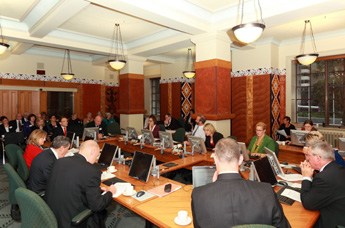
The Finance and Expenditure Select Committee, which heard oral submissions on the Commerce (Commerce Commission Reform) Amendment Bill on 27–28 May 2026.
Conflicting Positions
The Commerce Commission largely endorsed the review's diagnostic findings but opposed the structural legislative change.
The Commission preferred an advisory committee model instead.
Edwards described the proposed changes as an academic reorganisation of chaos during oral submissions — framing that encapsulates the scepticism held by consumer advocates about whether structural tinkering will produce meaningful competitive outcomes.
Chapman Tripp published analysis of the bill noting what it described as a few surprises in the legislation, including departures from the review's own recommendations. The firm appeared before the select committee in the slot immediately preceding Edwards' own oral submission.
The New Zealand Initiative supports the separation principle but urges explicit prohibitions on dual membership between the governance board and decision-making panels.
Implementation Risks and Productivity Upside
Implementation risks include transition costs, loss of institutional memory and potential for regulatory capture if the new board lacks sufficient challenger capacity.
The reforms aim to boost productivity by enabling more proactive competition advocacy and timelier decisions.
Over a two-to-five-year horizon, improved organisational coherence at the Commission could support the Government's productivity agenda.