Commerce Commission Nears Gas Pipeline Ruling on Cost Recovery
The Commerce Commission will release its final decision this week on the default price-quality path for New Zealand's gas pipeline businesses from October 2026, testing how much cost recovery the regulator allows network owners to accelerate as supply and demand decline.
Auckland’s potential $5 billion Fast-track infrastructure exposure and 16,270 wrongly suspended Winter Energy Payments have become the first real-world stress tests of the Regulatory Standards Act 2025.
Cabinet’s Economic Policy Committee has formally authorised public consultation on a prudential levy to shift Reserve Bank supervision costs onto banks, insurers and market infrastructure operators from 2027/28.
Cabinet has agreed in principle to three shifts in public performance reporting sought by the Finance and Expenditure Committee, while parking detailed design and costings until 2027.
The Commerce Commission is scheduled to issue its final decision on or before 29 May 2026 for the fourth default price-quality path, known as DPP4. The five-year period runs from 1 October 2026 to 30 September 2031 and covers Firstgas Transmission, Firstgas Distribution, GasNet, Powerco and Vector.
The draft decision released on 27 November 2025 proposed allowing network owners to front-load approximately $250 million in additional revenue over two years through shorter asset lives. This step addresses stranding risk as gas networks face structural contraction.
Maximum allowable revenue would rise from $399 million in 2025/26 to $420 million in the first year of DPP4 under a largely flat real revenue path. The draft rejected new system growth capital expenditure and a demand-variation revenue adjustment mechanism.
In declining to implement a demand-variation revenue adjustment mechanism, the Commission placed demand risk primarily on network owners rather than consumers — a position consistent with the long-term benefit of consumers under Part 4 of the Commerce Act 1986, as set out in the draft decision reasons paper.
A network in structural decline
New Zealand's indigenous gas production has more than halved over the past decade, according to the Gas Industry Co's 2026 Gas Supply and Demand Study. Proven-plus-probable reserves fell 27 percent from around 1,300 PJ in 2023 to 948 PJ in 2024. Production into open-access pipelines dropped 22 percent year-on-year to 106 PJ in 2024.
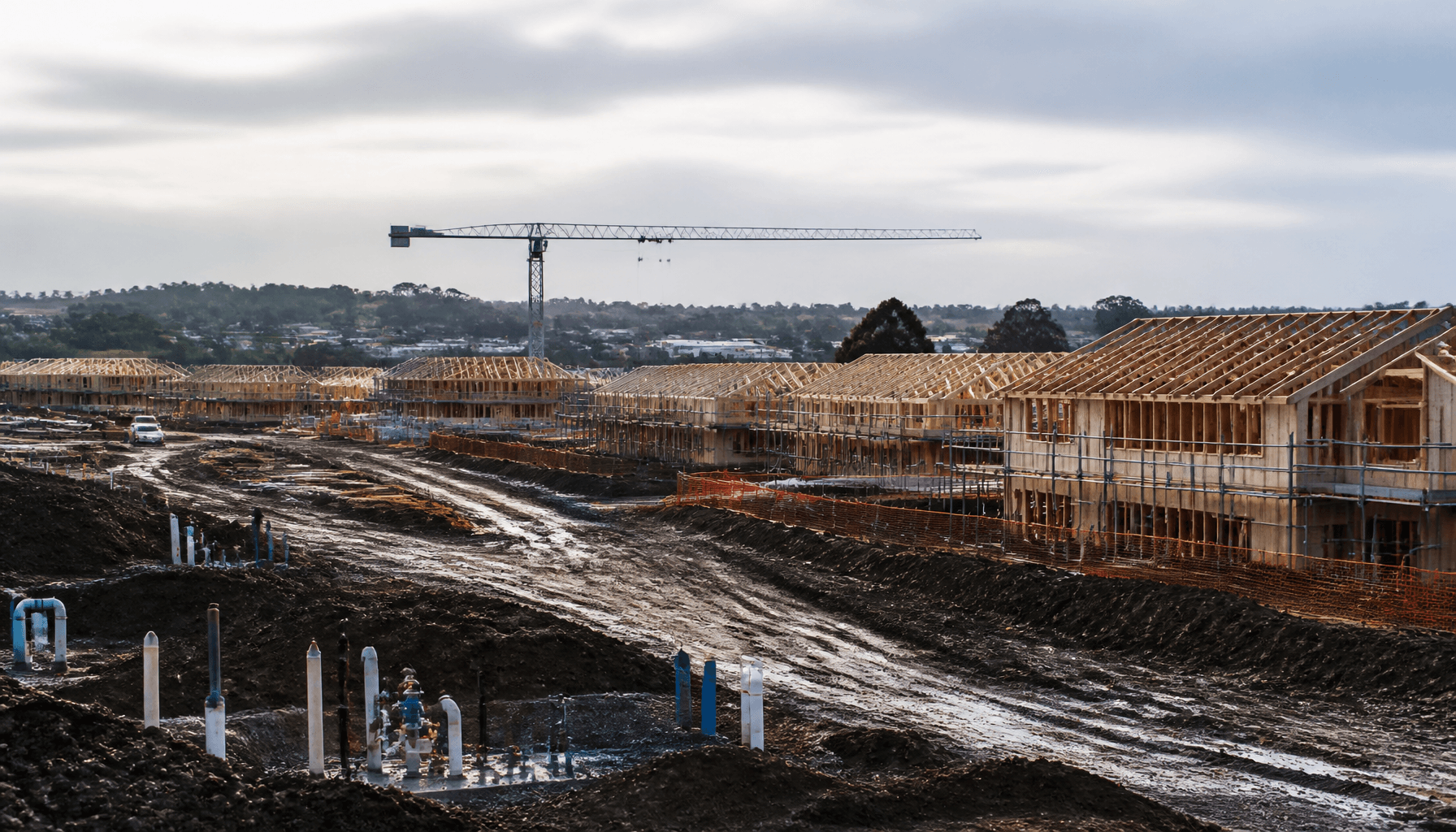
AI illustration of a gas pipeline pressure regulation station on New Zealand's North Island, used here to illustrate the ageing network infrastructure whose cost recovery terms are being set by the Commerce Commission's DPP4 ruling.
Firstgas, Powerco and Vector lodged joint submissions and cross-submissions arguing for stronger uncertainty mechanisms and accelerated depreciation. The Commission consulted on input methodology amendments for gas transmission.
Gas production into open-access pipelines
Annual decline reflects structural contraction of New Zealand indigenous gas supply.
Source: Gas Industry Co 2026 Gas Supply and Demand Study
Government transition scheme adds pressure
Finance Minister Nicola Willis announced a government $1.2 billion loan guarantee scheme on 25 May 2026, according to a Beehive release, aimed at supporting businesses transitioning off gas. Higher network charges from front-loaded recovery could interact with this policy and accelerate customer exits.
The final ruling will allocate transition costs between current and future users. It will also influence capital allocation by network owners and the cost of the energy transition for industrial, commercial and residential customers in regions with higher gas penetration.