Government Commits $59 Million to Six Primary Sector Projects Totaling $143 Million
The government is investing $59 million across six projects under the Primary Sector Growth Fund, leveraging $84 million in private contributions for a total $143 million package announced at Fieldays.
Cabinet’s Economic Policy Committee has formally authorised public consultation on a prudential levy to shift Reserve Bank supervision costs onto banks, insurers and market infrastructure operators from 2027/28.
Cabinet has agreed in principle to three shifts in public performance reporting sought by the Finance and Expenditure Committee, while parking detailed design and costings until 2027.
ASB’s Q2 2026 Regional Economic Scoreboard left Wellington joint last with Gisborne while Canterbury led on dairy cash, jobs and retail. The capital’s multi-quarter underperformance is structural: public-service consolidation, a deep housing correction and stalled population growth colliding with a national OCR still set for nationwide inflation.
The New Zealand government announced $59 million in public funding for six co-investment projects at Fieldays on 10 June 2026. The funding forms part of the Primary Sector Growth Fund established in Budget 2025. Private and sector partners contribute the remaining $84 million, bringing the total investment value to $143 million.
The projects target productivity improvements in beef and sheep farming, dairy, kiwifruit, aquaculture, timber processing and Māori land management. Each includes environmental targets such as reduced nitrogen leaching.
The announcement was made by Prime Minister Christopher Luxon alongside Agriculture and Forestry Minister Todd McClay and Māori Development Minister Tama Potaka at Fieldays at Mystery Creek, which runs from Wednesday to Saturday and is expected to attract over 100,000 people.
The Primary Sector Growth Fund totals $246 million over four years. It replaces the previous Sustainable Food and Fibre Futures programme. Treasury documentation shows remaining SFFF operating funding of approximately $70 million per year on average has been reallocated into the new co-investment model.
The Six Projects
One project receives $3.6 million in government funding toward an $8.5 million five-year beef and sheep initiative. A dairy project secures $18.3 million government support in a $45.9 million seven-year programme. Goals include a 20 percent reduction in nitrogen leaching per hectare, 20 percent higher hill country pasture utilisation and 30 percent better feed conversion efficiency.
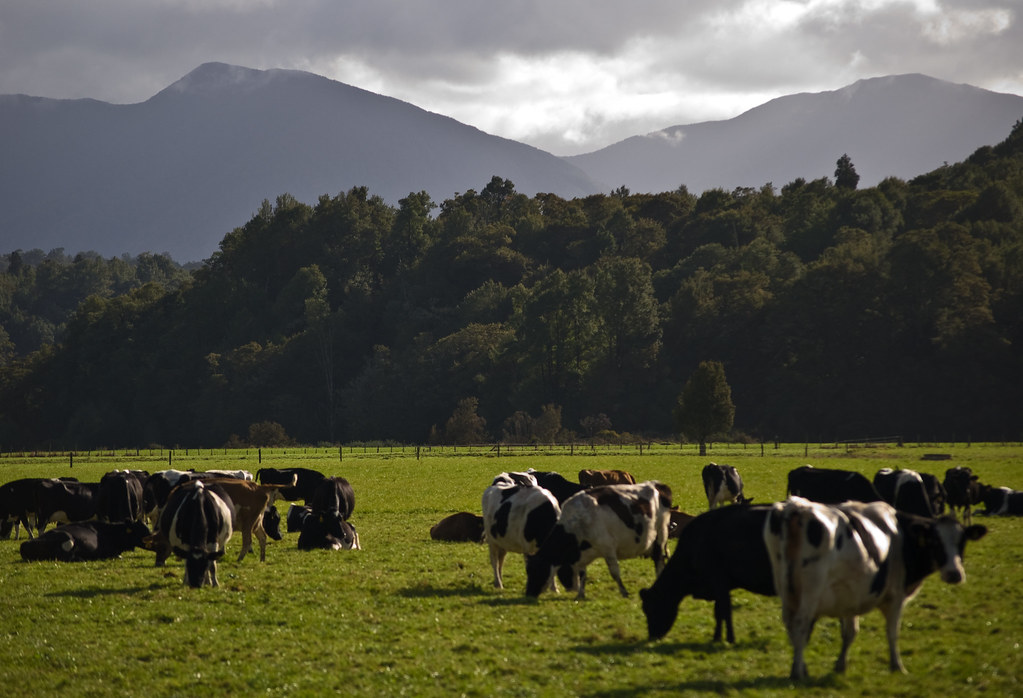
A West Coast dairy farm — the kind of operation targeted by the $18.3 million government co-investment in a seven-year dairy output programme under the Primary Sector Growth Fund.
Kiwifruit receives $19.1 million government funding in a $47.9 million five-year project with Zespri and New Zealand Kiwifruit Growers Incorporated. King Salmon open-ocean aquaculture gains $11.7 million in a $29.3 million initiative first announced in March 2026. Timber processing feasibility work obtains $3.2 million over three years in an $8 million project with VoMo Limited. Māori landowners secure up to $2.6 million over two years in an $8 million metrics project with Te Arawa Primary Sector Incorporated.
Primary Sector Growth Fund: Six Projects at a Glance
Project
Total Value (NZD millions)
Beef & sheep (5-year)
$8.5m ($3.6m govt)
Dairy output (7-year)
$45.9m ($18.3m govt)
Kiwifruit value (5-year)
$47.9m ($19.1m govt)
King Salmon aquaculture
$29.3m ($11.7m govt)
Timber processing feasibility (3-year)
$8.0m ($3.2m govt)
Māori land metrics (2-year)
$8.0m ($2.6m govt)
Source: RNZ News / Government announcement, 10 June 2026
Sector Weight and Policy Context
New Zealand's food and fibre sector recorded record export revenue of $60.4 billion in the year to 30 June 2025, up 13 percent, according to the Ministry for Primary Industries Situation and Outlook for Primary Industries December 2025. Revenue is forecast to reach $62 billion in the year to 30 June 2026. The sector accounts for 15.3 percent of GDP including indirect effects.
A Lincoln University and ASB Bank report estimates optimised land use and new technology could add $10 billion to the economy over five to seven years. The government frames the fund as supporting productivity growth while meeting 2050 climate targets through technology.
"Together, these projects matter because they will demonstrate, on real farms and orchards, what is possible when innovation, capital and ambition come together." — Prime Minister Christopher Luxon
Luxon said the initiative was about building confidence for farmers and producers, rural lenders and investors — to show proof that innovation can deliver growth. He emphasised the government's commitment to remaining within the Paris Agreement to protect market access, noting that if New Zealand products were removed from shelves, competitors would benefit.
Agriculture and Forestry Minister Todd McClay said the government was committed to backing farmers and growers to achieve their aspirations. "Appropriate rules and regulation coupled with innovation ensures their ideas are not just pipedreams, but viable and profitable pathways," he said. McClay noted many projects are farmer-driven and expects more announcements in coming years, with funding providing choice rather than taxation or forced reduction in farming.
Co-Investment Model and Fiscal Design
The PSGF focuses on co-investment in projects that organisations or companies would not be expected to complete as part of core business, delivering economic, environmental, social or cultural benefits. The approach emphasises voluntary incentives and choice rather than taxation or production cuts.
The fund operates on a tagged contingency basis within Budget 2025 allocations across Agriculture, Biosecurity, Fisheries and Food Safety votes. Further project announcements are expected in coming years.
Opposition comment was sought at time of publication but had not been received.