Report Finds Less Than Quarter of Major Projects Receive Cost-Benefit Analysis
New Zealand spends about $20 billion a year on public infrastructure yet less than a quarter of major projects receive a formal cost-benefit analysis of the preferred option.
Auckland’s potential $5 billion Fast-track infrastructure exposure and 16,270 wrongly suspended Winter Energy Payments have become the first real-world stress tests of the Regulatory Standards Act 2025.
Cabinet’s Economic Policy Committee has formally authorised public consultation on a prudential levy to shift Reserve Bank supervision costs onto banks, insurers and market infrastructure operators from 2027/28.
Cabinet has agreed in principle to three shifts in public performance reporting sought by the Finance and Expenditure Committee, while parking detailed design and costings until 2027.
New Zealand spends about $20 billion a year on public infrastructure yet less than a quarter of major projects receive a formal cost-benefit analysis of the preferred option.
A Helen Clark Foundation report published on 20 May 2026 found only two of six central government agencies apply cost-benefit analysis consistently. Waka Kotahi and Kāinga Ora are the exceptions. The other four agencies and most local councils treat the tool as optional.
The National Infrastructure Pipeline tracks nearly 12,000 initiatives worth $275 billion as of September 2025. More than two-thirds of that value, or $193 billion, lacks full funding.
Treasury released an updated CBAx tool for Budget 2026. The original version dates to 2015. Agencies also have the 2015 Guide to Social Cost Benefit Analysis and Waka Kotahi's Monetised Benefits and Costs Manual. The report notes that urgency provisions and shifting priorities often bypass these frameworks.
AI illustration of the scale of New Zealand's infrastructure pipeline against the small fraction of projects receiving formal cost-benefit analysis, as documented in the Helen Clark Foundation's May 2026 report.
A Consistency Gap Across Government
Kali Mercier, deputy director of the Helen Clark Foundation and author of the report, said: "The main finding is that we should be using cost-benefit analysis a lot more, it's really important that we do the economic analysis of all the projects that we're planning to put vast sums of money into to make sure that we're getting value for money."
She added that post-implementation evaluation is almost entirely absent.
"The other thing we're not doing very well is post-implementation evaluation of projects. We should be looking back at these projects, every single one, we're spending a billion dollars or so. Why aren't we checking to see whether the project delivered the value we said it would deliver?" — Kali Mercier, Helen Clark Foundation
Minister Points to Investment Management System Reforms
Infrastructure Minister Chris Bishop welcomed the report. He noted recent updates to the Investment Management System and the transfer of project assurance from Treasury to the independent Infrastructure Commission.
"We've already announced changes to improve how the Government selects infrastructure projects, including updates to the Investment Management System to ensure projects meet New Zealanders' needs, deliver value for money, and can be successfully delivered. This includes transferring infrastructure project assurance from The Treasury to the independent NZ Infrastructure Commission." — Chris Bishop, Infrastructure Minister
High-profile overruns continue to highlight the problem. Former City Rail Link boss Sean Sweeney estimated the project could have cost half as much with firmer early design decisions.
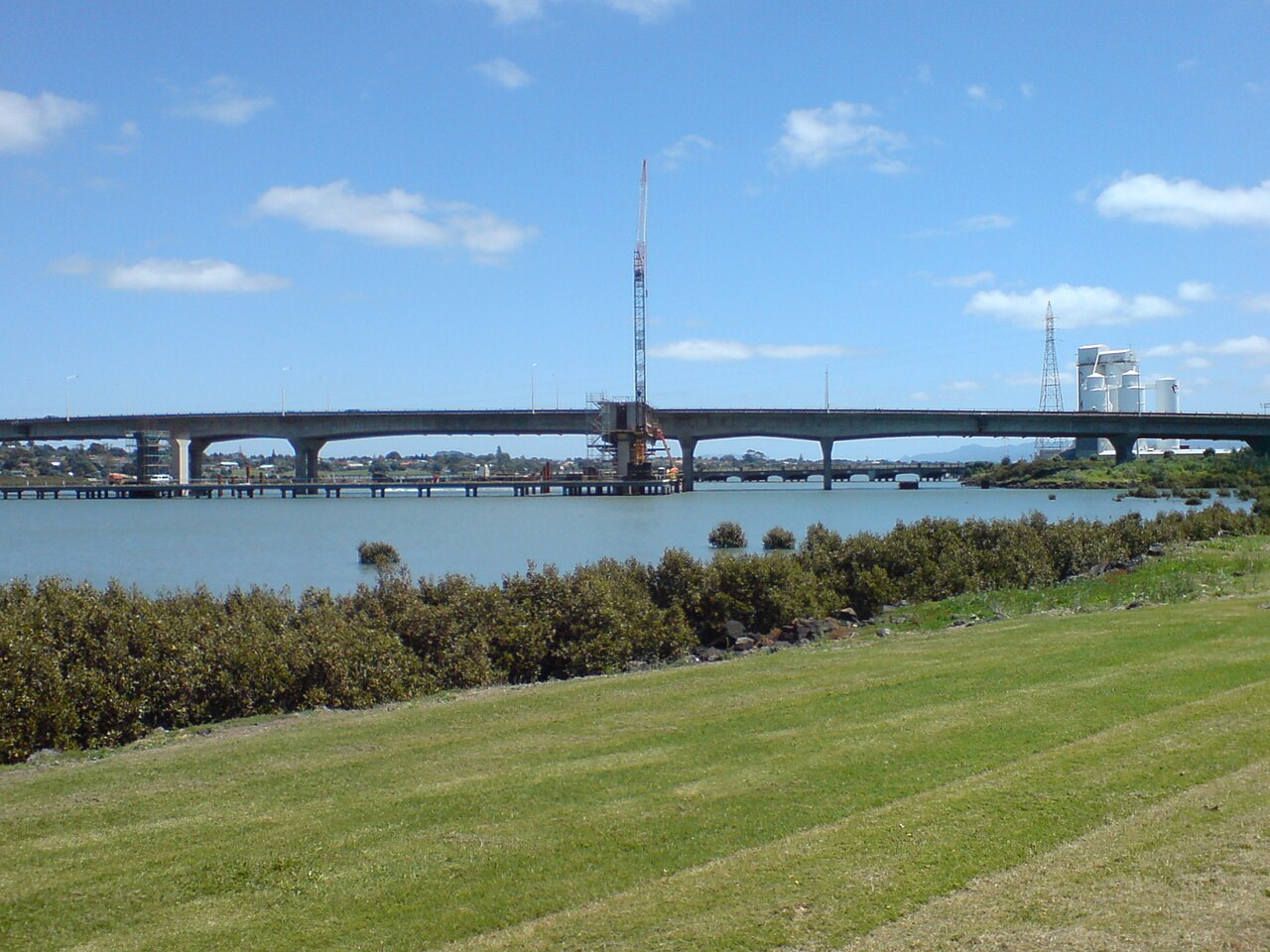
Mangere Bridge under construction — a New Zealand infrastructure project of the kind the Helen Clark Foundation report says should be subject to mandatory cost-benefit analysis and post-completion review.
An International Benchmark
Australia's Infrastructure Australia mandates published business cases and post-completion reviews for large projects. New Zealand's tools exist on paper but lack mandatory application.
The $275 billion pipeline and $20 billion annual spend represent a major claim on future taxpayers. Without systematic analysis, poorly chosen projects risk locking in higher debt and lower productivity gains.
Mercier called for the Infrastructure Commission to require published benefit-cost ratios and business cases for all major projects. She also urged mandatory post-completion reviews.
The next National Infrastructure Strategy and Budget round offer a clear window to embed these requirements. Fiscal discipline demands that every infrastructure dollar demonstrably improves productivity or resilience rather than adding to Crown liabilities.
National Infrastructure Pipeline: Funded vs Unfunded Value
More than two-thirds of the pipeline by value lacks full funding as of September 2025.
Source: Te Waihanga National Infrastructure Pipeline, September 2025