Katikati kiwifruit labour firm liquidated with $845k sole IRD tax debt
NZ Vine Care Limited, a dormant Katikati horticultural labour supplier, entered shareholder liquidation owing Inland Revenue $845,000 as the sole preferential creditor, crystallising years of PAYE, GST, penalties and interest.
NZ First has proposed a 50% accelerated depreciation allowance in the first year for new plant, machinery and equipment in manufacturing and select export sectors including mining, aquaculture, forestry, farming and fishing.
The Treasury published the Digital, Equipment and Change Assurance Framework on 23 October 2026. The guide operationalises Cabinet's April 2026 decision to improve assurance over high-risk data, digital, equipment and organisational change investments.
The New Zealand Treasury published the Investment Decision Assurance Policy on 13 October 2026. The framework consolidates the Gateway reviews and Te Waihanga's Infrastructure Priorities Programme into one investor-focused process effective 1 November 2026.
NZ Vine Care Limited has been placed into liquidation owing Inland Revenue $845,000. The Katikati horticultural labour-supply company lists IR as its only creditor.
Shareholders resolved the wind-up on 5 September 2026 under section 241(2)(a) of the Companies Act 1993. Grant Bruce Reynolds of Reynolds & Associates was appointed liquidator the same day. His first report was filed on 8 September.
Companies Office records show the firm was incorporated on 30 April 2018. Its sole director is Amritpal Singh of Katikati. The business classification is labour supply for horticulture workers. The registered office was at 6 Nolan Place, Katikati.
The company had ceased trading roughly seven years before the liquidation. The liquidator's first report records the $845,000 claim as preferential debt covering PAYE, GST and accumulated penalties and interest. Other potential creditors have been invited to come forward.
A sector under scrutiny
The case lands inside a wider Inland Revenue enforcement push across horticulture. On 6 August 2026 the Commissioner issued Revenue Alert RA 26/02 on non-compliance in the sector.
The alert targets cash wages, complex multi-layer contracting that obscures who supplies labour, false or empty labour invoices, and failures to withhold under schedular-payment rules for cultivation contract work. The standard withholding rate is 15 percent. The non-notification rate is 45 percent.
In the year to 30 June 2026, IR opened about 130 horticulture investigations involving $7.2 million in discrepancies. Forty-five cases remained open. Three people in the sector received home-detention sentences on tax-evasion charges.
IRD spokesperson Tony Morris told RNZ the department is likely missing out on tens of millions of dollars. He said the alert gave operators a chance to fix their affairs.
It's an opportunity for people to get their affairs in order, if they're not, before we come looking.
Morris said most work and money in the sector is paid in cash, creating non-compliance risks. A large share of IR focus has fallen on the Bay of Plenty kiwifruit labour market.
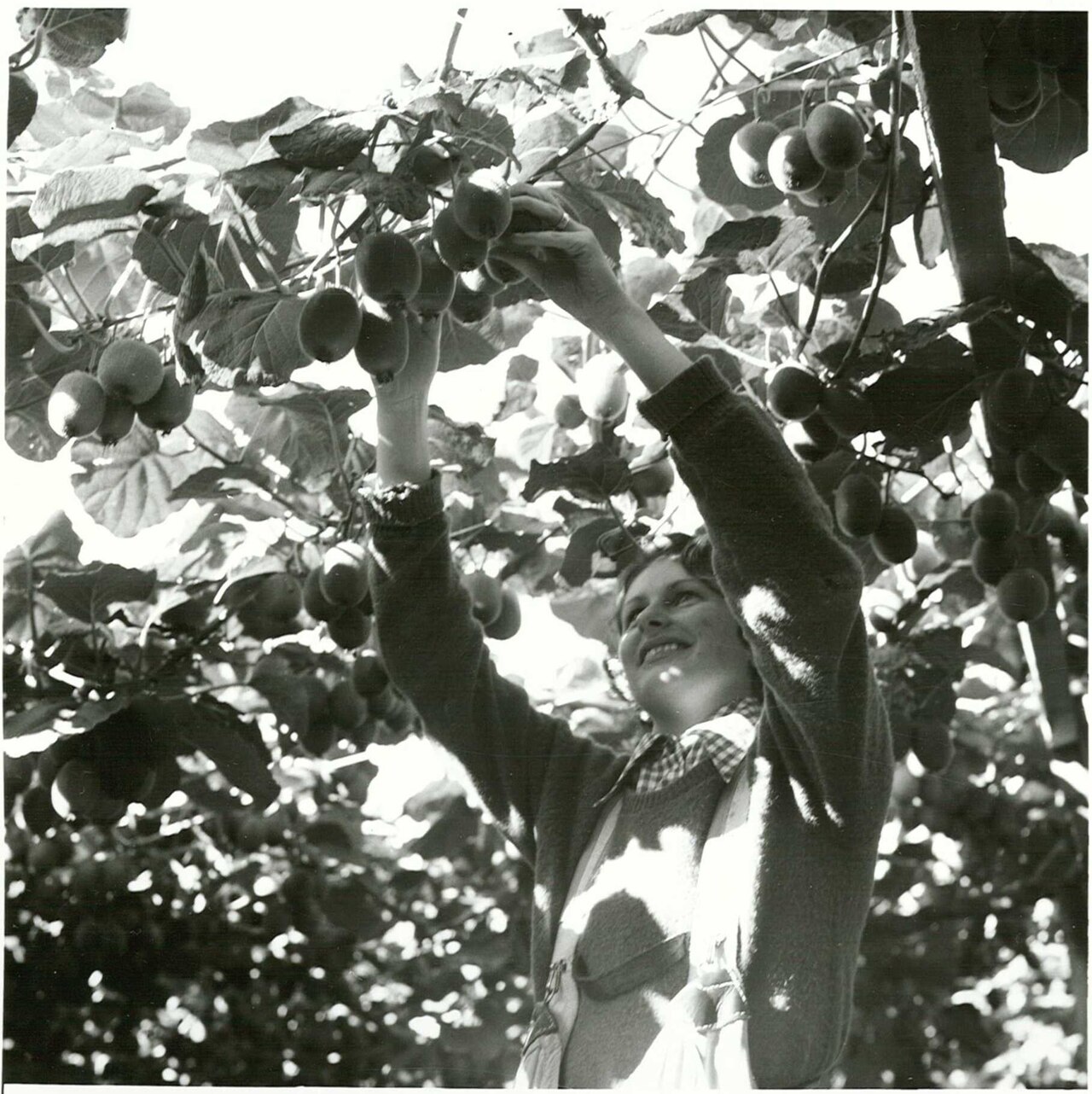
Kiwifruit harvesting on pergola vines in the Bay of Plenty, the region where Inland Revenue's horticulture enforcement push — and NZ Vine Care's collapse — is centred.
The national debt picture
National overdue tax and entitlement debt stood at $9.3 billion at 30 June 2025, up from $7.9 billion a year earlier. Employer-activities debt, which includes PAYE, rose 34 percent to $2.0 billion. GST debt reached $3.3 billion. Companies owed about $5.7 billion.
By 31 December 2025 the stock was about $9.0 billion. Penalties and interest made up roughly 35 percent of overdue debt. IR collected a record $4.3 billion in overdue tax and entitlements in 2024–25. It referred 650 cases to court for liquidation orders, a 49 percent rise on the prior year.
In the year to 31 March 2026, IR liquidated 605 companies and bankrupted 118 individuals. It issued 1,525 statutory demands. Write-offs totalled $804.7 million in 2024–25. IR's annual report notes the vast majority of debt is not recovered from companies in liquidation.
Peer cases, larger scale
Peer cases show the same pattern at larger scale. Top Produce Limited, another Bay of Plenty kiwifruit labour contractor directed by Amandeep Singh, entered liquidation on 4 March 2026 with Reynolds as liquidator. IR's claim totalled about $1.5 million, including roughly $689,000 preferential GST and PAYE. No assets or records were located.
Crasborn Fresh Harvest Limited, a Hawke's Bay apple-growing subsidiary linked to Kiwi Crunch, was liquidated on IR application on 3 July 2026. Court and reporting material put the IR debt above $19 million. The first liquidators' report later indicated creditor claims exceeding $53 million. Related entities entered voluntary administration.
Labour-standards cases have run in parallel. Employment Relations Authority determinations in August 2026 ordered six-figure repayments and penalties against other Bay of Plenty kiwifruit labour firms over underpayment, unlawful premiums and cash-for-jobs visa schemes.
Zespri's compliance architecture
Zespri's 2025/26 results underline the industry's scale. Global fruit sales revenue reached $5.9 billion. New Zealand-grown fruit and service payments totalled $3.56 billion. Net profit after tax was $280.1 million. The marketer requires contractors on supplying orchards to hold Compliance Assessment Verification under GLOBALG.A.P./GRASP programmes and publishes a suspended list. It works with the Labour Inspectorate, Immigration NZ and IR.
For the Crown, each shell liquidation crystallises uncollectable PAYE and GST that have already inflated the overdue book. Preferential ranking protects the revenue relative to trade creditors when assets exist. In dormant shells they often do not. Write-offs and non-collectable balances feed through fiscal forecasts even as collection volumes rise.
Expect more voluntary liquidations of dormant horticulture contractors as statutory demands and GST-registration scrutiny tighten. Compliant growers and contractors who already withhold correctly gain relative advantage. Treasury's debt and write-off assumptions will continue to matter for OBEGAL and net-debt tracks as IR works through the residual book.