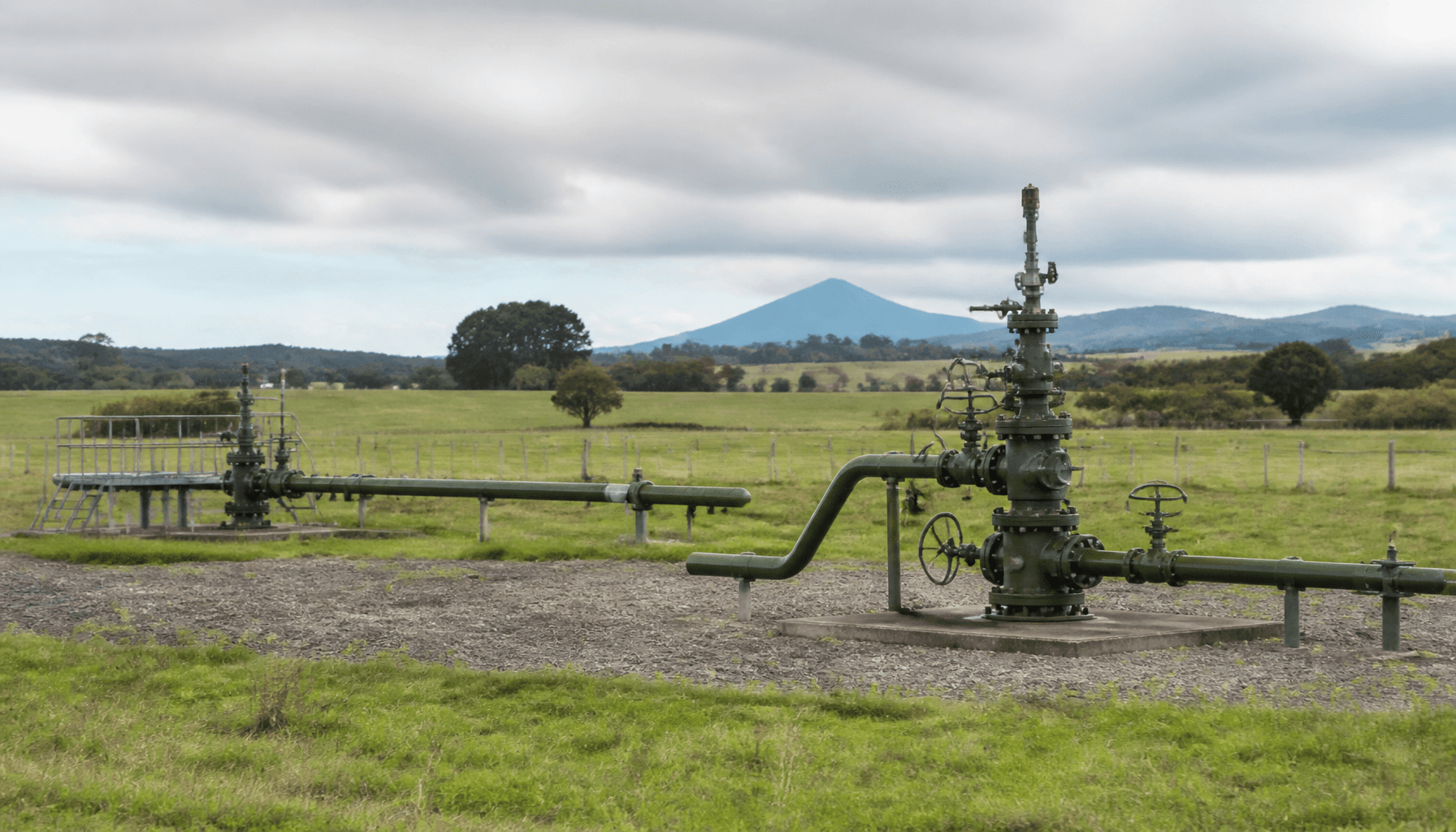
New Zealand Petroleum and Minerals has granted Matahio NZ Onshore Limited a 10-year petroleum mining permit over about 19 square kilometres of onshore Taranaki. The permit covers the shut-in Puka oil and gas field and the adjacent Oru prospect.
Resources Minister Shane Jones said the decision is only the second petroleum mining permit granted in eight years. It is also one of two granted in about the past year. He framed the grant as evidence of returning momentum after years of low activity.
Matahio estimates recoverable volumes from the existing Puka discovery at about 170,000 barrels of oil and 1.3 billion cubic feet of gas. An independent assessment cited by the Government puts Oru prospective resources at 1.8 million barrels of oil and 1.2 billion cubic feet of gas.
Those gas increments are small against the national balance. MBIE data as at 1 January 2026 put proven-plus-probable gas reserves at 731 petajoules, down 23% in a year and the lowest in the two-decade official series.
AIM-listed Sunda Energy agreed in April 2026 to buy Matahio’s New Zealand package, including Cheal, Cheal East, Sidewinder and Puka. Completion was targeted for the third quarter of 2026, subject to ministerial change-of-control consent. Sunda’s deal includes a US$0.5 million contingent payment on conversion of PEP 51153 to a mining permit.
Sunda and THREE60 Energy’s competent person’s report carry Oru P50 associated gas at 3.9 billion cubic feet, higher than the 1.2 Bcf figure in the ministerial statement. The 1.8 million barrel oil figure aligns across Government and company sources. Investors should treat both gas numbers as attributed assessments, not a single settled volume.
THREE60 classifies Puka restart as contingent resources (Development Pending), with best-estimate volumes on the order of 0.16 million stock-tank barrels of oil and about 1.18 billion standard cubic feet of gas, and an 80% chance of commerciality. Production at Puka was suspended in 2015 after prices collapsed. Sunda plans gas restart from three wells tied back through Cheal into the Firstgas domestic network, and Oru-2 drilling within about 12 months of permit conversion.
Sunda chief executive Andy Butler described the acquisition as transformational for the company and emphasised gas delivery to the New Zealand market.
The assets being acquired come with tremendous potential, particularly around bringing gas resources to the New Zealand market.
The Crown Minerals Amendment Act 2025, in force from 5 August 2025, repealed the 2018 ban on new offshore exploration permits and restored a promotional purpose to the Crown Minerals Act. NZP&M later awarded EnZed Energy a 12-year offshore Taranaki exploration permit in July 2026, described as the first new offshore PEP since the ban’s reversal. Mining-permit grants remain rarer because they require a discovery, appraisal and an accepted work programme.
In July 2026 Jones welcomed a competitive process on a further Sunda offshore northern Taranaki application. He called it the sixth petroleum prospecting or exploration permit application accepted since removal of the offshore ban.
This is the sixth petroleum prospecting or exploration permit application accepted since the Government removed the offshore oil and gas exploration ban, and another encouraging sign that investors are taking a fresh look at New Zealand’s resource potential.
NZP&M guidance states a petroleum mining permit allows development of a discovered field. Size and duration are limited to the discovery, with a statutory maximum of 40 years. This Puka grant is a 10-year term over a small footprint. Royalties under the post-2013 petroleum royalty regulations channel the Crown’s fiscal take. Domestic gas sales and oil exports are the private revenue channels.
Jones has argued every incremental gas source helps amid declining reserves. He has said gas supports electricity generation in periods of low hydro inflows and provides feedstock for important businesses. He has also said this permit alone will not solve New Zealand’s energy challenges. Boston Consulting Group’s Energy to Grow work described domestic gas supply falling about 45% in six years and forecast to halve again in five years without stronger supply and demand responses.
MBIE Domains Manager Amapola Generosa linked the latest reserves print to field performance and operator plans.
Natural gas reserves have continued to decline in line with operators’ field information and expected production.
Reuters reported that Labour intends to reimpose an offshore exploration ban if returned to office while honouring existing permits. That stance creates election-cycle risk for long-cycle capital even as the coalition processes new applications. Environmental advocates frame fresh petroleum permits as inconsistent with emissions pathways.
For households and businesses the channel is gas scarcity first and oil revenue second. Domestic gas underpins industrial heat and feedstock and flexible thermal generation when hydro inflows are low. Matahio NZ’s FY25 management accounts, disclosed in Sunda’s April RNS, showed about NZ$35.13 million of revenue, mostly oil. Sunda targets lifting the portfolio above 2,000 barrels of oil equivalent per day if restarts and Oru work.
Puka’s volumes cannot close the national gap. They do add a connected domestic molecule, a royalty and export path, and a de-risking step for Oru and Sunda’s wider Taranaki redevelopment thesis, including Sidewinder storage plans subject to approvals.
The arithmetic remains stark. Small onshore conversions will not reverse structural depletion on their own. The test for policy is whether a cluster of restarts, storage projects and resumed exploration can slow the slide enough to keep gas available through the 2030s while renewables and firming alternatives scale.