New Zealand rural confidence stayed positive for a ninth straight quarter in August 2026, with horticulturalists overtaking sheep and beef as the most optimistic sector while investment plans stayed soft.
ASB’s Q2 2026 Regional Economic Scoreboard left Wellington joint last with Gisborne while Canterbury led on dairy cash, jobs and retail. The capital’s multi-quarter underperformance is structural: public-service consolidation, a deep housing correction and stalled population growth colliding with a national OCR still set for nationwide inflation.
MBIE’s 6 September snapshot shows 51.7 days of petrol cover on paper. Only 34.5 of those days sit onshore. Eight of nine ships still float outside the EEZ, and sequential Hormuz then Red Sea stress is already priced into $3-plus petrol.
Pasifika unemployment stood at 11.6 percent in the June 2026 quarter, more than double the national seasonally adjusted rate of 5.6 percent.
Statistics New Zealand released the June 2026 quarter Labour Market Statistics on 5 August 2026. The data showed 23,700 Pacific peoples unemployed.
The national unemployment rate rose from 5.4 percent in the March 2026 quarter. It reached the highest level since September 2015.
Pasifika workers faced an annual average unemployment rate of 12 percent over the year to June 2026. This compared with the national annual average of 5.6 percent.
Māori unemployment averaged 11 percent over the same period. Their underutilisation rate reached 22 percent.
Ethnic Breakdown
Not seasonally adjusted figures for the March 2026 quarter provide further detail. Pacific peoples recorded 11.9 percent unemployment. Māori stood at 11.5 percent.
Asians recorded 4.8 percent. Europeans recorded 4.6 percent.
Pasifika underutilisation hit 21.3 percent for the year ended June 2026. This marked an increase of 2.2 percentage points from the prior year.
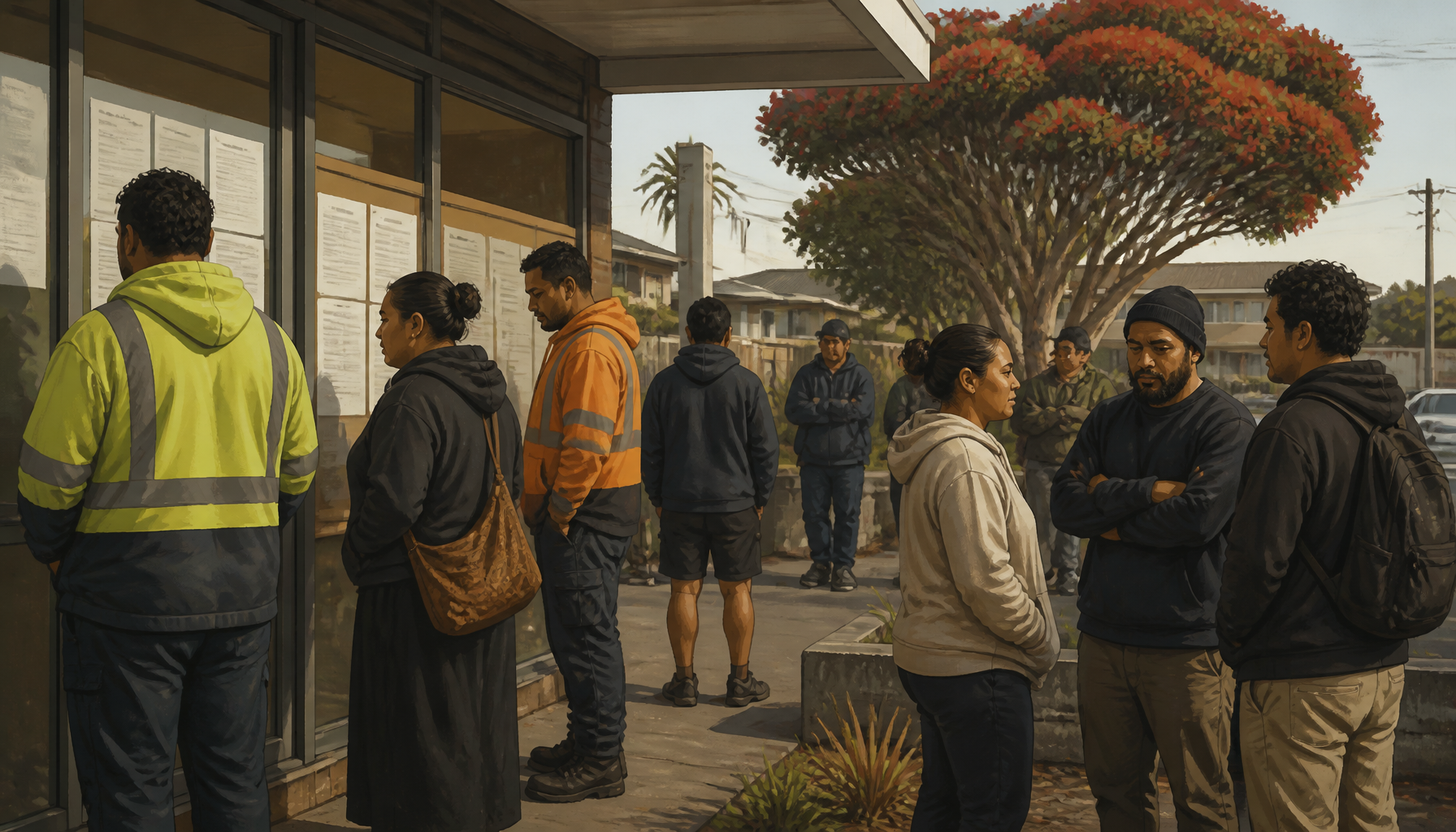
AI illustration of Pasifika workers in a South Auckland employment setting, used here to illustrate the persistent ethnic unemployment gap revealed in Stats NZ's June 2026 quarter data.
Broader Context
The national underutilisation rate rose to 13.8 percent in the June quarter. Employment increased by 13,000 to 2.91 million. The employment rate held steady at 66.7 percent.
Labour force participation rose to 70.7 percent. The number of unemployed people reached 171,000.
New Zealand's rate exceeded the OECD average of 5.0 percent recorded in April 2026, according to OECD data.
Unemployment Rates by Ethnic Group (March 2026 Quarter, Not Seasonally Adjusted)
Pacific peoples and Māori rates exceed the national average by a wide margin.
Source: Stats NZ Labour Market Statistics: March 2026 quarter
Regional and Policy Notes
Regional variation appeared in the year ended March 2026. Waikato recorded a Pasifika unemployment rate of 16 percent, while Auckland stood at 12.8 percent, according to Figure.NZ regional data.
Finance Minister Nicola Willis said the data confirmed what many New Zealanders already knew from experience: "the second quarter of this year was a tough one." She noted that April, May and June were difficult months for many employers who faced real uncertainty and rising costs, and outlined government policy moves aimed at boosting economic growth.
"For the New Zealanders who've been out there looking for work in that environment, we know it's been hard going." — Finance Minister Nicola Willis
The elevated spare capacity in the labour market supports disinflationary pressures. It also raises questions around targeted employment programmes and benefit expenditure.
Higher Pasifika joblessness reduces household spending power in key regions. It increases demand for services from MSD and MBIE, with fiscal implications for a government seeking to restore budget discipline while addressing structural ethnic disparities in labour market outcomes.