School Lunches Programme Saves Taxpayers $122 Million in 2027
Associate Education Minister David Seymour announced on 15 May 2026 that the Healthy School Lunches Programme will save taxpayers $122 million in 2027 while delivering meals to 242,000 students each school day.
Auckland’s potential $5 billion Fast-track infrastructure exposure and 16,270 wrongly suspended Winter Energy Payments have become the first real-world stress tests of the Regulatory Standards Act 2025.
Cabinet’s Economic Policy Committee has formally authorised public consultation on a prudential levy to shift Reserve Bank supervision costs onto banks, insurers and market infrastructure operators from 2027/28.
Cabinet has agreed in principle to three shifts in public performance reporting sought by the Finance and Expenditure Committee, while parking detailed design and costings until 2027.
Associate Education Minister David Seymour announced on 15 May 2026 that the Healthy School Lunches Programme will save taxpayers $122 million in 2027 while delivering meals to 242,000 students each school day.
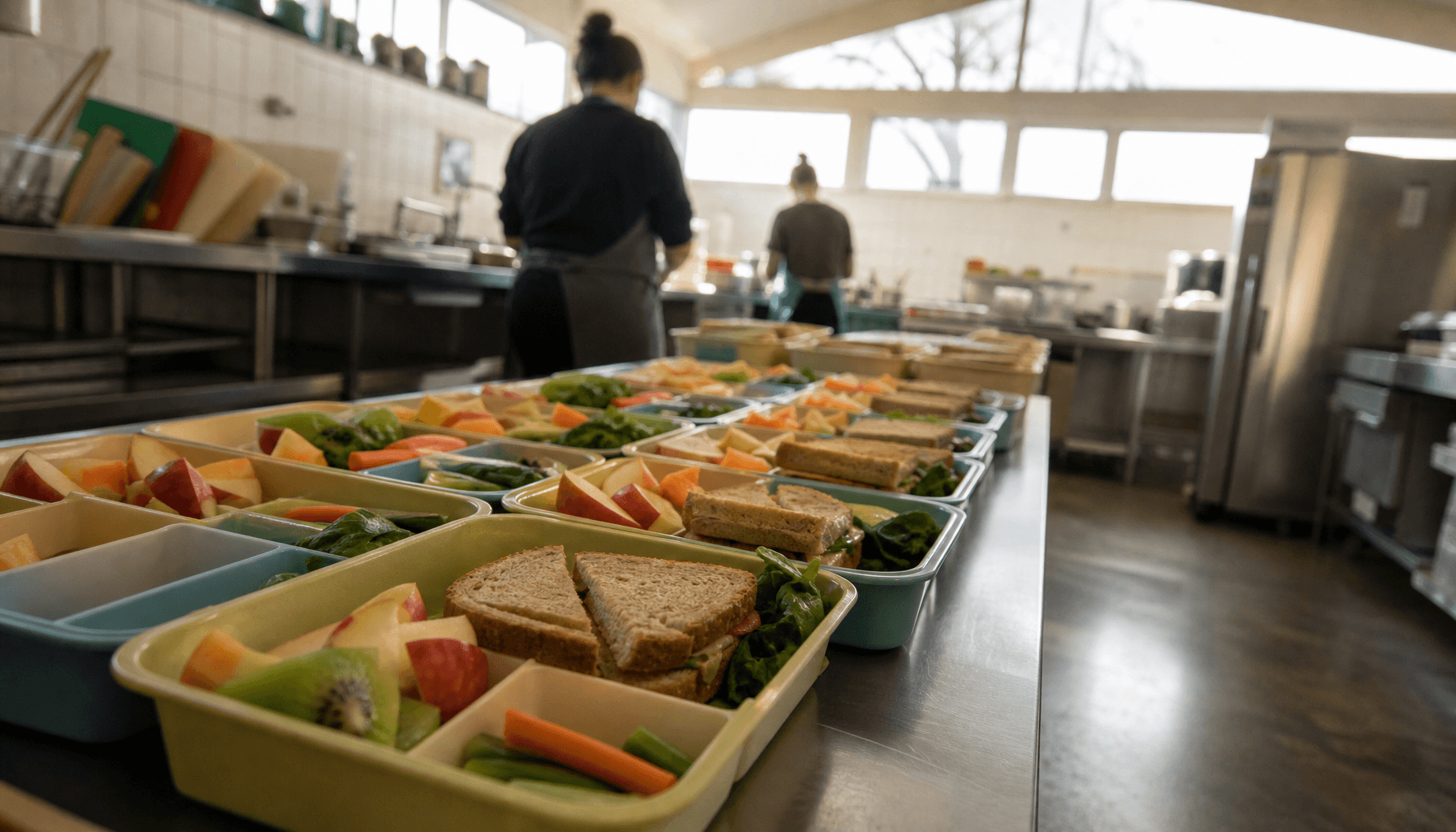
Illustration: The Healthy School Lunches Programme now delivers meals to 242,000 students every school day across more than 1,000 schools and kura.
Fiscal Savings Delivered
The Government will extend the Healthy School Lunches Programme into 2027 under a multi-supplier model that has already cut costs sharply. Budget 2026 allocates $212.4 million to cover both the school programme and the early childhood education food stream for one more year. This funding sits inside Vote Education and supports the coalition's drive to return the operating balance before gains and losses to surplus.
"When schools open in 2027, the programme will offer nutritious meals to around 242,000 students, every school day, at a cost affordable to the taxpayer." — Associate Education Minister David Seymour
Since the beginning of Term 1 2025, the Programme has delivered over 48 million meals to over 1,000 schools. By the end of 2027 the Programme is expected to save about $360 million compared to how Labour funded it.
Cost Per Meal Falls Sharply
Under the previous Labour government the maximum cost reached $8.68 per student. The current weighted average across ten commercial suppliers stands at $3.58. Treasury figures in the 2025/26 Estimates of Appropriations show the broader Vote Education appropriation at $3.05 billion, with the specific Food Programme line item previously budgeted at $62.7 million before the revamp.
Per-Meal Cost Comparison (NZ$)
Bars compare Labour-era peak against the current weighted average across all suppliers.
Source: Beehive.govt.nz release, 15 May 2026; Ministry of Education funding tables
The 2025 revamp already delivered $107 million in annual savings. Cumulative savings are projected to reach $360 million by the end of 2027 compared with Labour-era funding levels.
Performance Metrics Improve
On-time delivery now approaches 100 per cent every day. Complaints have fallen by more than 92 per cent since Term 1 2025, when the programme began serving over 48 million meals to more than 1,000 schools and kura. External suppliers receive $3 per meal rising with inflation, while internal-model schools receive $4 to $4.51 per meal after the 6 per cent annual adjustment.
"The Programme continues to improve. After fixing some teething issues, the Programme now delivers a good service. On time delivery is almost 100 per cent every day and complaints have fallen by over 92 per cent. We are getting the same results as the old programme, but cheaper." — Associate Education Minister David Seymour
Equity Pilot and ECE Extension
Of the $122 million in 2027 savings, $4.8 million each year will extend lunches to up to 10,000 children in early learning services. A further $2.9 million will fund pilots to close gaps in the equity-index eligibility rules. The Ministry of Education will go to market for ECE delivery in 2027.
Contribution to Surplus Target
These savings form part of the wider fiscal restraint outlined in Treasury forecasts. Lower per-meal costs free operating headroom while preserving the programme's reach to schools with the highest concentrations of disadvantage. The Ministry has incorporated the September 2026 Living Wage rise to $29.90 per hour into supplier and internal rates.
Independent commentary — including reporting by Newsroom and academic evaluations cited in peer-reviewed literature — has flagged risks that aggressive cost reduction could affect long-term quality and infrastructure investment. Labour claimed a measure of vindication when the Government committed to the multi-supplier free lunch model, with RNZ reporting the party's view that the revamped programme validated the original Ka Ora, Ka Ako investment. The Government maintains that commercial discipline and tighter contract management have improved service reliability without compromising nutrition standards.
The $122 million saving in 2027 will be reflected in the Half-Year Economic and Fiscal Update. Sustained efficiencies of this scale reduce pressure on Crown debt-to-GDP and support the timeline for restoring fiscal surplus.