Economic News
Subscribe →
HomeMonetary PolicyFiscalTradeRegulationBankingEconomic DataAbout
Vol. 02 · New Zealand
TUESDAY 08/09/2026
Iss. 2026 / 37
Economic News

Balanced. Independent. Informed.

Sections

  • Monetary Policy
  • Fiscal
  • Trade
  • Regulation
  • Banking
  • Economic Data

Subscribe

  • Free email
  • Email preferences
  • RSS feed

Company

  • About
  • Privacy policy

About

Economic News is an independent New Zealand publication covering monetary policy, markets, the public finances and the wider economy.

© 2026 Economic News Limited
.

Two-speed primary sector: arable squeeze amid $64.3b exports — Economic News
Live
FISCAL · Labour holds fuel-tax costings until PREFU as NLTF shortfall dispute widensFISCAL · Labour holds fuel-tax costings until PREFU as NLTF shortfall dispute widensFISCAL · Labour holds fuel-tax costings until PREFU as NLTF shortfall dispute widensFISCAL · Labour holds fuel-tax costings until PREFU as NLTF shortfall dispute widensFISCAL · Labour holds fuel-tax costings until PREFU as NLTF shortfall dispute widensFISCAL · Labour holds fuel-tax costings until PREFU as NLTF shortfall dispute widensFISCAL · Labour holds fuel-tax costings until PREFU as NLTF shortfall dispute widensFISCAL · Labour holds fuel-tax costings until PREFU as NLTF shortfall dispute widensFISCAL · Labour holds fuel-tax costings until PREFU as NLTF shortfall dispute widensFISCAL · Labour holds fuel-tax costings until PREFU as NLTF shortfall dispute widensFISCAL · Labour holds fuel-tax costings until PREFU as NLTF shortfall dispute widensFISCAL · Labour holds fuel-tax costings until PREFU as NLTF shortfall dispute widensFISCAL · Labour holds fuel-tax costings until PREFU as NLTF shortfall dispute widensFISCAL · Labour holds fuel-tax costings until PREFU as NLTF shortfall dispute widensFISCAL · Labour holds fuel-tax costings until PREFU as NLTF shortfall dispute widensFISCAL · Labour holds fuel-tax costings until PREFU as NLTF shortfall dispute widensFISCAL · Labour holds fuel-tax costings until PREFU as NLTF shortfall dispute widensFISCAL · Labour holds fuel-tax costings until PREFU as NLTF shortfall dispute widensFISCAL · Labour holds fuel-tax costings until PREFU as NLTF shortfall dispute widensFISCAL · Labour holds fuel-tax costings until PREFU as NLTF shortfall dispute widensFISCAL · Labour holds fuel-tax costings until PREFU as NLTF shortfall dispute widensFISCAL · Labour holds fuel-tax costings until PREFU as NLTF shortfall dispute widensFISCAL · Labour holds fuel-tax costings until PREFU as NLTF shortfall dispute widensFISCAL · Labour holds fuel-tax costings until PREFU as NLTF shortfall dispute widensFISCAL · Labour holds fuel-tax costings until PREFU as NLTF shortfall dispute widensFISCAL · Labour holds fuel-tax costings until PREFU as NLTF shortfall dispute widensFISCAL · Labour holds fuel-tax costings until PREFU as NLTF shortfall dispute widensFISCAL · Labour holds fuel-tax costings until PREFU as NLTF shortfall dispute widensFISCAL · Labour holds fuel-tax costings until PREFU as NLTF shortfall dispute widensFISCAL · Labour holds fuel-tax costings until PREFU as NLTF shortfall dispute widensFISCAL · Labour holds fuel-tax costings until PREFU as NLTF shortfall dispute widensFISCAL · Labour holds fuel-tax costings until PREFU as NLTF shortfall dispute widensFISCAL · Labour holds fuel-tax costings until PREFU as NLTF shortfall dispute widensFISCAL · Labour holds fuel-tax costings until PREFU as NLTF shortfall dispute widensFISCAL · Labour holds fuel-tax costings until PREFU as NLTF shortfall dispute widensFISCAL · Labour holds fuel-tax costings until PREFU as NLTF shortfall dispute widensFISCAL · Labour holds fuel-tax costings until PREFU as NLTF shortfall dispute widensFISCAL · Labour holds fuel-tax costings until PREFU as NLTF shortfall dispute widensFISCAL · Labour holds fuel-tax costings until PREFU as NLTF shortfall dispute widensFISCAL · Labour holds fuel-tax costings until PREFU as NLTF shortfall dispute widensFISCAL · Labour holds fuel-tax costings until PREFU as NLTF shortfall dispute widensFISCAL · Labour holds fuel-tax costings until PREFU as NLTF shortfall dispute widensFISCAL · Labour holds fuel-tax costings until PREFU as NLTF shortfall dispute widensFISCAL · Labour holds fuel-tax costings until PREFU as NLTF shortfall dispute widensFISCAL · Labour holds fuel-tax costings until PREFU as NLTF shortfall dispute widensFISCAL · Labour holds fuel-tax costings until PREFU as NLTF shortfall dispute widensFISCAL · Labour holds fuel-tax costings until PREFU as NLTF shortfall dispute widensFISCAL · Labour holds fuel-tax costings until PREFU as NLTF shortfall dispute widensFISCAL · Labour holds fuel-tax costings until PREFU as NLTF shortfall dispute widensFISCAL · Labour holds fuel-tax costings until PREFU as NLTF shortfall dispute widensFISCAL · Labour holds fuel-tax costings until PREFU as NLTF shortfall dispute widensFISCAL · Labour holds fuel-tax costings until PREFU as NLTF shortfall dispute widensFISCAL · Labour holds fuel-tax costings until PREFU as NLTF shortfall dispute widensFISCAL · Labour holds fuel-tax costings until PREFU as NLTF shortfall dispute widensFISCAL · Labour holds fuel-tax costings until PREFU as NLTF shortfall dispute widensFISCAL · Labour holds fuel-tax costings until PREFU as NLTF shortfall dispute widensFISCAL · Labour holds fuel-tax costings until PREFU as NLTF shortfall dispute widensFISCAL · Labour holds fuel-tax costings until PREFU as NLTF shortfall dispute widensFISCAL · Labour holds fuel-tax costings until PREFU as NLTF shortfall dispute widensFISCAL · Labour holds fuel-tax costings until PREFU as NLTF shortfall dispute widensFISCAL · Labour holds fuel-tax costings until PREFU as NLTF shortfall dispute widensFISCAL · Labour holds fuel-tax costings until PREFU as NLTF shortfall dispute widensFISCAL · Labour holds fuel-tax costings until PREFU as NLTF shortfall dispute widensFISCAL · Labour holds fuel-tax costings until PREFU as NLTF shortfall dispute widensFISCAL · Labour holds fuel-tax costings until PREFU as NLTF shortfall dispute widensFISCAL · Labour holds fuel-tax costings until PREFU as NLTF shortfall dispute widensFISCAL · Labour holds fuel-tax costings until PREFU as NLTF shortfall dispute widensFISCAL · Labour holds fuel-tax costings until PREFU as NLTF shortfall dispute widensFISCAL · Labour holds fuel-tax costings until PREFU as NLTF shortfall dispute widensFISCAL · Labour holds fuel-tax costings until PREFU as NLTF shortfall dispute widensFISCAL · Labour holds fuel-tax costings until PREFU as NLTF shortfall dispute widensFISCAL · Labour holds fuel-tax costings until PREFU as NLTF shortfall dispute widens
ECONOMIC DATA

Two-speed primary sector: $64.3b food exports mask arable squeeze

New Zealand’s food and fibre exports are on track for a record $64.3 billion while the arable complex that underpins seed security and domestic grain is contracting under dairy conversion, processor exits and sticky costs.

Analysis Desk03/09/2026 · 17:22 NZT14 min read
Economic DataBreaking
AD
Analysis Desk
Senior Economics Correspondent · 03/09/2026 · 17:22 NZT · 14 min read
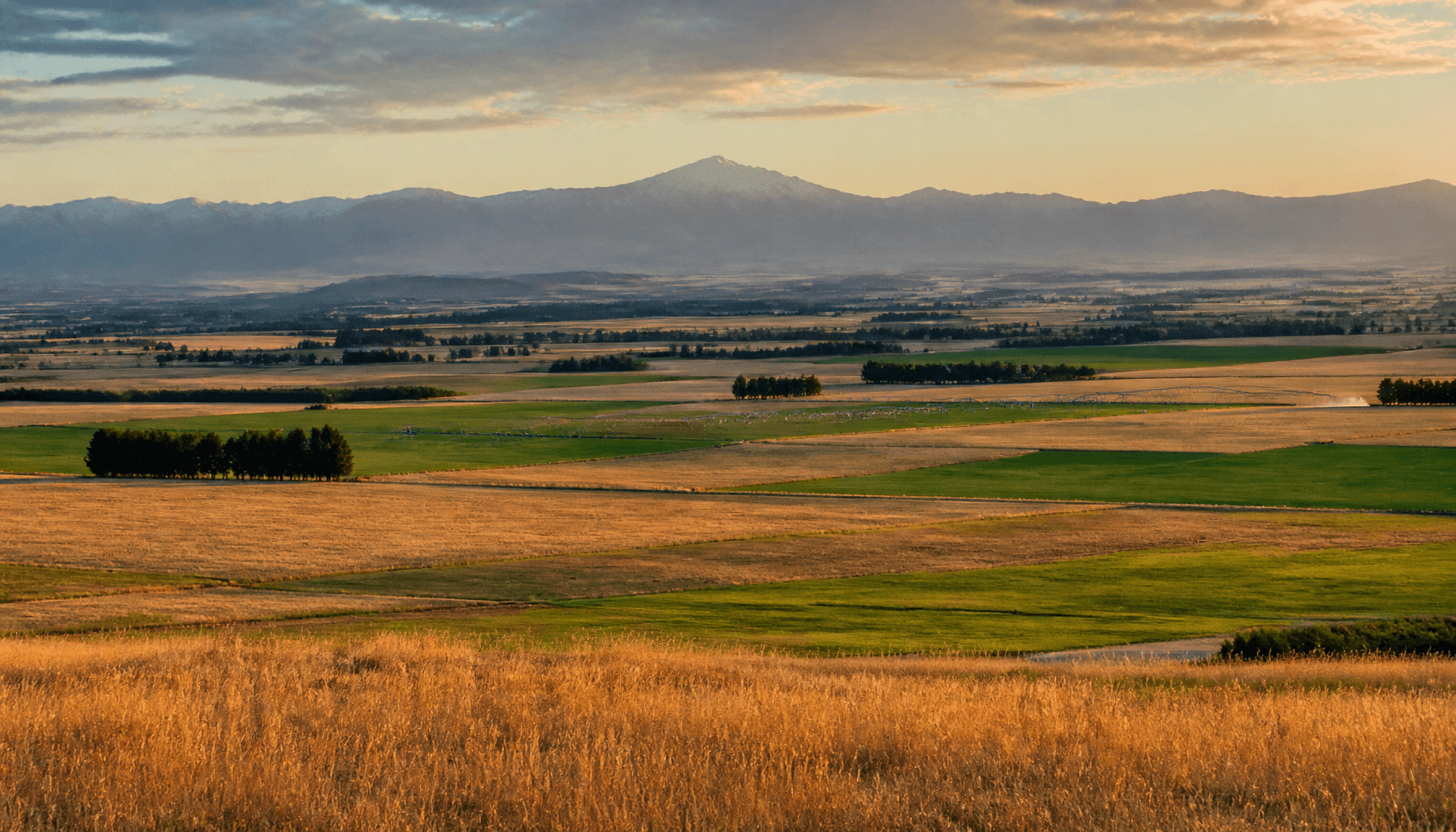
Canterbury plains farmland showing mixed arable and pasture land use under evening light

Sources cited

  • Situation and Outlook for Primary Industries – June 2026 update — Ministry for Primary Industries
  • Food and fibre exports set to hit record $64.3 billion — Beehive.govt.nz
  • OCR increased by 25 basis points to 2.75% — Reserve Bank of New Zealand
  • Fonterra revises its 2026/27 forecast Farmgate Milk Price — Fonterra
  • Economic impact of New Zealand's arable industry (November 2025) — BERL / Arable Food Industry Council
  • AIMI New Zealand survey of cereals areas and volumes: July 1, 2026 — Foundation for Arable Research
  • Alcohol available for consumption: Year ended December 2025 — Stats NZ
  • Dairy conversions: What's the story? — Environment Canterbury
  • Wave of Canterbury dairy conversions fuels rapid herd growth — Farmers Weekly
  • — 1News

Free

New Zealand's economy, straight to your inbox.

By subscribing you accept our privacy policy.

More from economic data

Reserve Bank of New Zealand headquarters exterior under overcast Wellington sky
Monetary Policy · 07/09/2026 · 14:21 NZT

RBNZ lifts OCR to 2.75% toward neutral as fuel CPI and El Niño frame 2027 risks

The Reserve Bank raised the OCR 25 basis points to 2.75% on 2 September, a second consecutive hike framed as gradual removal of stimulus toward neutral settings rather than a 2022–23-style squeeze, as Treasury’s Fortnightly Economic Update tied the move to firmer business activity, a fuel-led CPI spike to 4.1%, slowed Australian growth and a Very Strong El Niño.

Analysis Desk·07/09/2026 · 14:21 NZT·14 min
Chilled export cartons being loaded at a New Zealand port cold store
Trade · 04/09/2026 · 18:55 NZT

Canada trade push is a CPTPP utilisation test, not a new FTA

Trade Minister Todd McClay is preparing a near-term package to deepen New Zealand–Canada commerce under CPTPP, not a fresh free-trade deal, as red meat exports to Canada hit NZ$740 million and dairy quota rules enter their first full calendar-year test.

Analysis Desk·04/09/2026 · 18:55 NZT·14 min
Heinz Wattie’s confirms closure of four NZ sites, about 300 jobs to go
  • Heinz Wattie’s Confirms Changes To Operations In New Zealand — Scoop / Heinz Wattie's
  • McCain to close Hastings vegetable processing factory — 1News
  • New Zealand: Malteurop to Shut Country’s Largest Malting Plant as Beer Demand Declines — inside.beer
  • NZ Brewing Shock As Major Malt Supplier Shuts — Pursuit of Hoppiness
  • New Zealand Grown Grains — NZ Grown Grains / FAR
  • Food brands sign up for home-grown logo — Ruralco
  • Economic impact of New Zealand's arable industry – FAR resource page — Foundation for Arable Research
  • Farmers strive to limit cows’ environmental footprint — Farmers Weekly
  • 32 more dairy farms approved in Canterbury this year — Otago Daily Times
  • Tractor with mounted sensors moving through Marlborough vineyard rows at dusk
    Economic Data · 04/09/2026 · 15:50 NZT

    IMF top-ten AI readiness meets a 4% transformation gap

    New Zealand ranks in the IMF’s global top ten on AI preparedness, yet Datacom finds only 4% of firms say AI has transformed core operations. The conversion gap—not discovery—is now the growth constraint.

    Analysis Desk·04/09/2026 · 15:50 NZT·16 min

    All economic data →

    New Zealand’s food and fibre complex is forecast to deliver a record $64.3 billion in export revenue in the year to 30 June 2026. Arable is the only major primary sub-sector MPI expects to shrink.

    The Ministry for Primary Industries’ June 2026 Situation and Outlook for Primary Industries puts arable export revenue down 4 per cent to $325 million. Dairy is set for a record $28.6 billion. Meat and wool are forecast at $14.1 billion. Horticulture is projected at $9.5 billion.

    That two-speed pattern was the central theme at the Seed and Grain Summit 2026 in Christchurch on 1–2 September. Industry leaders and Associate Agriculture Minister Mike Butterick described an arable sector under multi-front pressure even as the broader primary export machine sets records.

    Seed and Grain New Zealand chief executive Sarah Clarke told the summit a resilient arable base remains essential to food security, productivity, export performance and regional economies. Association president Edward Luisetti of Luisetti Seeds contrasted record returns elsewhere in agriculture with the struggle facing seed and grain. Butterick acknowledged the squeeze from fuel, fertiliser, agrichemicals, machinery and labour costs, while pointing to new market access for carrot seed into Mexico and further seed access work for ryegrass and radish.

    The policy implication is stark. Relative returns and post-NES-F consent settings are flipping Canterbury rotation land to dairy. Processor exits are destroying contracted offtake for process vegetables and malting barley. Coastal freight friction and Australian grain surplus keep North Island mills on import parity. A country celebrating $64 billion of food exports continues to import most of its bread wheat and is losing vegetable-processing capacity.

    MPI SOPI June 2026: food and fibre export revenue forecasts
    Arable is the only major primary sub-sector forecast to contract in the record export year.
    Source: MPI Situation and Outlook for Primary Industries June 2026; Beehive release 11 June 2026

    The drivers

    Relative returns are the first driver. Fonterra’s 2025/26 farmgate milk price midpoint remains $9.70 per kilogram of milk solids. Its 2026/27 midpoint was revised on 13 July 2026 to $9.25, still historically elevated. Macfarlane Rural Business and Federated Farmers Arable figures put typical arable-to-dairy conversion capital expenditure at about $20,000–$25,000 per hectare.

    The National Environmental Standards for Freshwater temporary agricultural intensification rules expired on 1 January 2025. Environment Canterbury has since issued discharge consents enabling potential for roughly 25,000–25,800 additional cows. Effluent and water-take consents under the Land and Water Regional Plan still apply, but the national conversion trigger is gone. Farmers Weekly has tracked a live pipeline of conversions into 2027–28.

    Production data confirm the squeeze on the ground. The Foundation for Arable Research AIMI cereals survey as at 1 July 2026 found 2026 harvest tonnages for the six cereals down 3 per cent, or about 23,100 tonnes, from a harvest area down 4 per cent to roughly 94,300 hectares. Difficult wet weather and Canterbury hail damaged quality. Intentions for the 2027 harvest point to a further 14 per cent area cut to about 81,400 hectares.

    FAR AIMI cereal harvest area and 2027 intentions
    Growers signal a sharp further cut in cereal area after a wet, quality-challenged 2026 harvest.
    Source: FAR AIMI New Zealand survey of cereals areas and volumes, 1 July 2026

    Domestic economic weight is larger than the export line. BERL’s assessment for the Arable Food Industry Council, covering 2024, put arable production at about 2.25 million tonnes of grains, maize silage and seeds. Direct sales were $1.219 billion. Total sales impact reached $2.565 billion. GDP contribution was $1.154 billion and employment 6,904 FTEs. Seeds drove much of the recent GDP growth; grains remain volume-flat and margin-compressed.

    Arable industry economic impact by segment, 2024
    Seeds punch above weight on GDP; grains dominate volume but face margin compression.
    Source: BERL for Arable Food Industry Council, November 2025

    Processor and malt demand destruction form the second driver. Heinz Wattie’s confirmed in March 2026 the closure of manufacturing sites in Christchurch, Dunedin and Auckland plus frozen packing lines in Hastings, exiting frozen vegetables and other lines. About 300 jobs are expected to go. Managing director Andrew Donegan said closing the sites and exiting those categories was the only way forward for long-term viability after consultation.

    McCain confirmed closure of its Hastings vegetable processing plant by the end of the 2026 packing season, expected by 31 January 2027. The plant processed more than 50,000 tonnes of vegetables a year. Official headcount at risk was not disclosed. Industry reporting has pointed to hundreds of growers affected across Canterbury and Hawke’s Bay.

    Malteurop will shut its Marton malthouse at the end of September 2026. The plant, built in 1979 with about 42,000 tonnes capacity, supplied an estimated 70 per cent of the domestic malt market including major brewers. About 14 direct jobs are affected. Local barley purchases had already fallen from a historical peak near 26,000 tonnes a year to 6,000–7,000 tonnes as production shifted south.

    Beer demand explains the malt exit. Stats NZ figures show beer available for consumption fell 10 per cent to 265 million litres in the year ended December 2025, the lowest level in the series. Total alcohol volume fell 8.3 per cent to 442 million litres. Of beer available, 86 per cent was produced in New Zealand.

    Beer available for consumption in New Zealand
    Structural decline in beer volume underpins malting overcapacity and the Marton exit.
    Source: Stats NZ Alcohol available for consumption, year ended December 2025

    Freight is the third driver. Swire’s Pacifica coastal container service, operating the last NZ-flagged boxship Moana Chief, moved in mid-2026 toward suspension and permanent withdrawal consultation. For South Island grain seeking North Island mills, every extra dollar of Cook Strait or coastal cost widens the Australian import advantage. Industry estimates have long held that at least 75 per cent of bread sold in New Zealand uses imported grain, largely Australian, because freight often exceeds import parity.

    Costs complete the stack. The Reserve Bank raised the OCR 25 basis points to 2.75 per cent on 2 September 2026, the same week as the summit. June quarter CPI rose to 4.1 per cent, driven largely by higher fuel prices from Middle East conflict. FAR contracts Macfarlane Rural Business for annual cost-of-production sheets; the 2026–27 forecast shows elevated diesel, urea, agrichemicals, contractors and irrigation energy.

    The trade-offs

    High milk prices and easier conversion consents buy dairy export growth and farm-gate cash flow. They cost multi-year seed isolation paddocks and rotation flexibility that underpin New Zealand’s global seed niche. Industry and FAR communications have long cited New Zealand’s supply of roughly 40 per cent to more than 50 per cent of world carrot seed and a large share of radish and white clover seed. Those multiplication systems need irrigated Canterbury land that dairy capital expenditure permanently removes.

    Domestic food-security branding trades against import-parity economics. NZ Grown Grains, a FAR certification trademark verified by AsureQuality, had about 25 licensees by early–mid 2026. There is no royalty cost. FAR analysis indicates local feed grains and NZ-milled flour from local wheat carry a lower carbon footprint than equivalent imports. Re-shoring milling wheat still requires a provenance premium large enough to beat Australian surplus plus Cook Strait costs.

    Processor scale exits cut contracted offtake and regional jobs now. Residual specialty capacity at Gladfield Malt in Dunsandel and the NZ Grown Grains franchise may build a premium domestic market only if supermarket and craft uptake materialises. Australian malt, including from Malteurop’s Geelong plant, is available to fill the gap.

    Nitrate politics sit on the other side of the conversion ledger. Canterbury groundwater monitoring has shown nitrate increases in a majority of tested wells in recent survey rounds, with a non-trivial share above the 11.3 mg/L drinking-water nitrate-nitrogen limit. Further intensification raises long-run regulatory risk even while current rules and milk prices favour conversion.

    Coastal shipping withdrawal lowers dedicated NZ-flag capacity. Sustaining uneconomic coastal services would carry fiscal and regulatory cost. The market signal is clear; the food-security narrative is harder.

    Second-order effects

    Each large dairy conversion punches multi-year holes in seed isolation maps. Grain logistics density falls. Unit costs rise for remaining growers, cleaners and contractors. Employment impact is diffuse across Mid-Canterbury, South Canterbury, Hawke’s Bay and the lower North Island rather than a single factory headline. BERL counted about 2,886 direct FTEs and 6,904 total FTEs in 2024.

    Marton’s closure removes a North Island malting barley bid immediately. Growers pivot to South Island channels or export feed. Gladfield expands residual domestic malt. Large brewers source more from Gladfield and Australia.

    Process-vegetable contract loss hits associated seed houses and rotation crops—peas, beans, sweetcorn and carrots—in Canterbury and Hawke’s Bay. MPI’s June 2026 SOPI explicitly linked horticulture vegetable-growing profitability pressure to higher input and freight costs and planned processing plant closures.

    If El Niño delivers a dry East Coast summer, palm kernel expeller and imported feed will displace local maize grain and silage. That adds another demand haircut on top of the 14 per cent cereal area intention cut.

    Credibility strain follows. New Zealand markets a low-emissions, food-secure primary brand while importing most bread wheat and exiting vegetable-processing capacity. The $64.3 billion export celebration and the arable attrition story sit in the same SOPI document.

    An MPI-led arable forum featuring director-general Ray Smith was flagged around the summit week. It is the near-term pressure valve on water, freight and market-access follow-through. Failure leaves relative prices and consent settings as the binding land-use drivers.

    Historical context

    Canterbury dairy expansion already remade the plains once. Academic work by Pangborn and Woodford traced dairy land from about 20,000 hectares in 1980 to nearly 190,000 hectares by 2008/09. Stats NZ land-use indicators show large national dairy area gains between 2002 and 2019, with Canterbury a major contributor. The current post-NES-F wave is a second conversion surge under still-high milk prices.

    Post-1980s deregulation gutted protected milling wheat. By the early 1990s Australian imports already supplied around two-thirds of bread-wheat requirements. Today’s estimated 75 per cent import share for bread is the durable equilibrium after protection ended. Arable survived as a high-skill seed-multiplication and specialty-grain niche—the seed bowl—not as commodity grain scale. That niche is now threatened by loss of rotation land.

    Peer markets show the same structural alcohol story. UK malting capacity cuts in 2025 included mothballs at Roseisle and Pencaitland. GB barley area projections have sat near post-2010 lows amid collapsing malting demand. OECD-FAO and Rabo medium-term outlooks see real agricultural prices broadly stable as productivity matches demand. Little cyclical price rescue is available for high-cost New Zealand grain.

    Australia’s large 2025 grain crop keeps cheap feed and milling wheat available into New Zealand mills, reinforcing the import-parity ceiling.

    The counter-argument

    The strongest opposing read treats seed exports as the resilient jewel and grain as a small, declining domestic residual. Seed export values reached $345 million in 2024. Vegetable seed has contributed roughly 36–42 per cent of arable export mix in recent AFIC and FAR commentary. Ryegrass is another large slice. New market access for carrot seed into Mexico is secured. Ryegrass access into India and Peru and radish into Ecuador remain in train. MPI’s June SOPI still forecasts arable export recovery of about 5 per cent from 2026–27 onward on hybrid seed demand and New Zealand’s established supply-chain role.

    On that view, dairy conversion is rational capital allocation. Milk prices clear the market. Processors exit when energy, water and scale economics fail. Coastal shipping exits when it cannot cover costs. NZ Grown Grains and Gladfield are the correct market responses: provenance premium and specialty malt, not commodity protection.

    The thesis against that counter-read rests on irreversibility and system risk. Conversion capital expenditure of $20,000–$25,000 per hectare is not easily reversed on a five-to-ten-year view. Seed multiplication requires isolation distances and multi-year rotations that disappear with the dairy shed. Global carrot and radish seed shares are national strategic assets built on Canterbury land, not interchangeable with generic pasture. Food-security branding that coexists with 75 per cent imported bread wheat and exiting process-vegetable capacity is a contradiction the export record does not resolve. BERL’s $1.15 billion GDP and 6,900 FTE footprint is regional infrastructure, not a rounding error.

    Both reads can be true in the short run. Seed exports can hold while the land base that produces them erodes. The open question is timing.

    Open questions

    Will enough irrigated Canterbury rotation land survive the 2027–28 conversion pipeline to defend 40–50 per cent-plus global carrot and radish seed shares, and major clover and ryegrass positions?

    Can NZ Grown Grains’ roughly 25 licensees and specialty malt, oats and oils win supermarket and craft shelf space at a premium that offsets lost process-vegetable and commodity-malt tonnes?

    Will North Island mills ever re-shore meaningful milling-wheat demand, or is the 75 per cent import bread share permanent under Australian surplus and Cook Strait economics?

    Does the MPI arable forum produce durable water, freight and market-access settings, or only rhetoric while relative returns keep flipping paddocks?

    How fast do nitrate politics or any future freshwater national direction re-tighten conversion rules—and after how much irreversible land loss?

    If El Niño delivers a dry East Coast summer, how large is the PKE and imported-feed displacement of local maize on top of the 14 per cent cereal area cut?

    What to watch next

    Watch the end-September 2026 Malteurop Marton shutdown and the barley bid that disappears with it. Watch McCain Hastings wind-down through January 2027 and the 2026/27 process-vegetable contract season. Watch ECan consent draw-down and Macfarlane and Federated Farmers conversion pipelines into spring 2027 and 2028. Watch Fonterra’s milk-price path against FAR cost-of-production sheets. Watch whether NZ Grown Grains licensees gain measurable supermarket shelf share by the 2027 harvest marketing year.

    The December 2026 MPI SOPI will revise the arable export path. The next FAR AIMI survey will test whether the 81,400-hectare intention holds. RBNZ’s October and December OCR decisions will set the working-capital cost of spring sowing under still-elevated diesel.

    New Zealand can run a record primary export machine and a hollowed arable base at the same time. Market signals explain why paddocks flip. Policy settings after NES-F explain why the flip is easy. The food-security and seed-bowl costs arrive later, measured in isolation maps, import shares and regional service jobs that do not reverse when milk prices eventually cool.