Willis Calls for Cross-Party Super Talks as National Backs Age Rise
Finance Minister Nicola Willis has invited other parties to cross-party talks on superannuation sustainability after National released its fiscal plan reaffirming plans to raise the retirement age.
NZ First has proposed a 50% accelerated depreciation allowance in the first year for new plant, machinery and equipment in manufacturing and select export sectors including mining, aquaculture, forestry, farming and fishing.
The Treasury published the Digital, Equipment and Change Assurance Framework on 23 October 2026. The guide operationalises Cabinet's April 2026 decision to improve assurance over high-risk data, digital, equipment and organisational change investments.
The New Zealand Treasury published the Investment Decision Assurance Policy on 13 October 2026. The framework consolidates the Gateway reviews and Te Waihanga's Infrastructure Priorities Programme into one investor-focused process effective 1 November 2026.
Finance Minister Nicola Willis has invited other parties to cross-party talks on superannuation sustainability after National released its fiscal plan reaffirming plans to raise the retirement age.
Finance Minister Nicola Willis issued the invitation on 12 October 2026. National's fiscal plan, released the previous day, maintains the party's commitment to gradually lifting the NZ Super eligibility age from 65 but gives no start date or pace.
The move ties any future tax relief to a return to fiscal surplus. Treasury forecasts in the Pre-election Economic and Fiscal Update 2026 show that surplus arriving no earlier than 2028/29.
Willis said politicians cannot 'dance alone' on the issue. She urged parties to set aside pettiness for an enduring solution that gives New Zealanders time to plan.
Willis said politicians cannot 'dance alone' on the issue.
Treasury's PREFU 2026 projects an OBEGALx deficit of $6.8 billion, or 1.4 per cent of GDP, in 2026/27. The deficit narrows to a $4.0 billion surplus in 2028/29 and reaches $11.7 billion by 2030/31.
Net core Crown debt is forecast to peak at 43.9 per cent of GDP in 2027/28 before falling to 39.5 per cent by 2030/31.
Superannuation's Rising Bill
Superannuation costs already exceed $30 billion a year and are projected to rise further. By 2030 the annual bill will surpass $30 billion, up from less than $20 billion in 2023.
Combined with debt interest, superannuation is expected to consume 28 per cent of tax revenue by 2030.
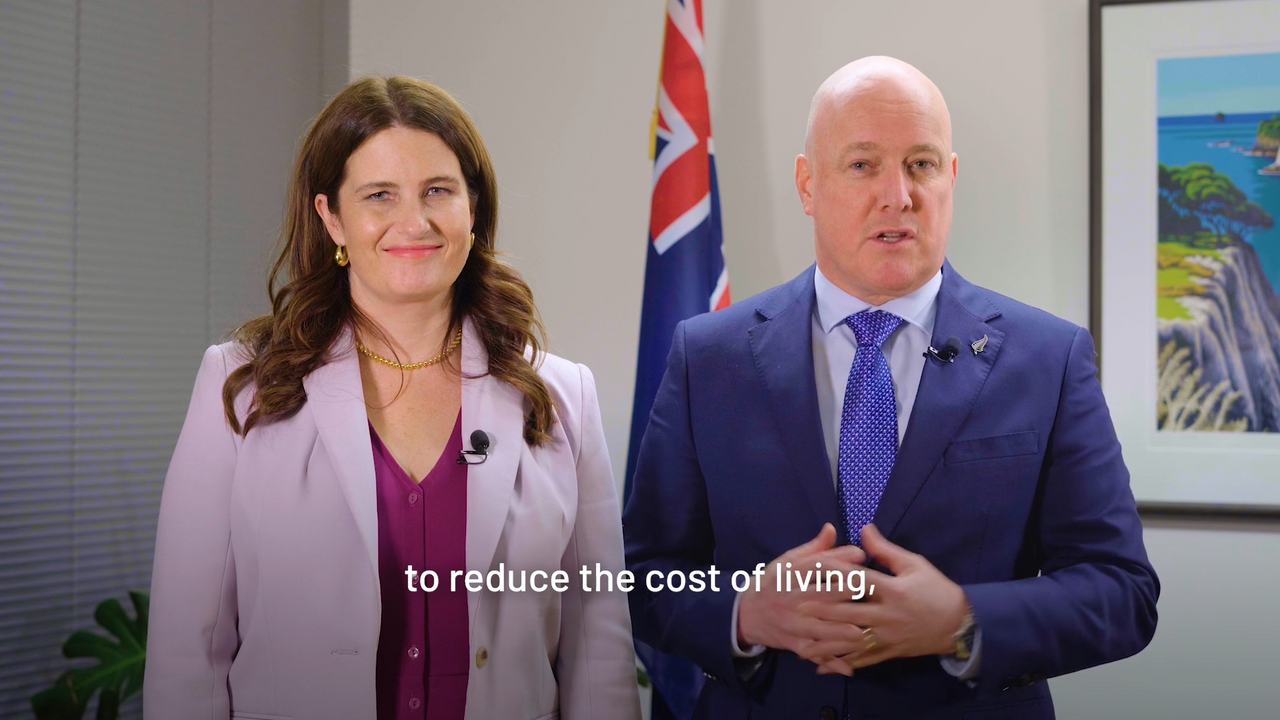
Finance Minister Nicola Willis, pictured with Prime Minister Christopher Luxon at a Budget delivery, has invited other parties to cross-party talks on superannuation sustainability.
ACT's Faster Timetable
ACT's separate fiscal plan, released 11 October 2026, proposes raising the age by three months every year to reach 67 by 2035. The party projects annual savings of $1.9 billion by 2031 and net core Crown debt $12.4 billion below Treasury forecasts.
National vs ACT superannuation fiscal plans
Measure
Detail
National: age rise timeline
No start date or pace specified
ACT: age rise timeline
3 months/year to 67 by 2035
ACT annual savings by 2031
$1.9 billion
ACT net core Crown debt reduction by 2031
$12.4 billion below Treasury forecast
Comparing the two parties’ approaches to retirement age reform and fiscal impact.
Source: National and ACT fiscal plans, released 11 October 2026
A July 2026 RNZ-Reid Research poll found 58 per cent of respondents wanted the eligibility age to stay at 65. Only 35.3 per cent supported an increase to 67.
Labour finance spokesperson Barbara Edmonds agreed with Willis on 11 October to broader talks covering retirement income, aged care and KiwiSaver.
The Retirement Commission's 2025 Review recommends keeping the age at 65 for now while assessing wider options.
Demographic Pressure
Demographics add pressure. The worker-to-retiree ratio has fallen from seven in the 1960s to four today and is projected to reach two by 2065.
Willis stressed the need for honesty across parties. She said every New Zealander at retirement should get New Zealand superannuation but future settings will have to change.
The talks aim to deliver predictable, phased reform that protects the entitlement while managing long-term costs to taxpayers.