ASB warns inflation to top 4 per cent as OCR hold raises mortgage costs
ASB Bank forecasts inflation above 4 per cent for the rest of 2026, citing supply-chain effects from the Middle East conflict that prompted the Reserve Bank to hold the official cash rate at 2.25 per cent in April.
"Once inflation goes up, it doesn't often go back down again by the same degree. I think, in some areas, we could easily be feeling these impacts for a long time yet."Kim Mundy, ASB senior economist
Cabinet’s Economic Policy Committee has formally authorised public consultation on a prudential levy to shift Reserve Bank supervision costs onto banks, insurers and market infrastructure operators from 2027/28.
Australian-based users viewing New Zealand property listings jumped 190% year-on-year in August, realestate.co.nz said, after Canberra tightened capital gains and negative gearing rules on new residential investments.
Finance Minister Nicola Willis has refused the Reserve Bank’s first bid to roll $10.1 million of 2025/26 underspend into 2026/27 and published three criteria that will govern every future variation under the 2025–30 Five-Year Funding Agreement.
ASB Bank forecasts inflation above 4 per cent for the rest of 2026, citing supply-chain effects from the Middle East conflict that prompted the Reserve Bank to hold the official cash rate at 2.25 per cent in April.
ASB senior economist Kim Mundy said the conflict, now in its 12th week with the Strait of Hormuz effectively closed, has pushed petrol prices up about 55 cents a litre and diesel 90 cents a litre.
Average petrol now exceeds $3.30 a litre. The bank expects initial pressure on food, freight and plastic products.
Discretionary sectors such as retail and hospitality face softer demand as household spending power falls.
Mundy warned that roughly a quarter of the economy has high or very high exposure to at least two key disruptions.
She told RNZ:
While the immediate effect has been higher fuel prices, that's only one piece of the puzzle. The broader story is how the entire cost shock - which includes fertiliser and petrochemicals - spreads through supply chains, lifting the cost of manufactured goods, packaging, freight and farm inputs, and the flow-on effects of that to consumer spending.
The effects start business-to-business. Consumer pass-through will take time and could linger because inflation is sticky.
Growth forecasts revised sharply lower
ASB expects New Zealand GDP to contract 0.3 per cent in the June quarter and grow just 0.3 per cent in the September quarter.
Westpac NZ Economics has cut its 2026 growth forecast to 1.5 per cent from earlier views, citing real petrol and diesel prices at 50-year highs.
The pre-conflict OECD baseline, published in the OECD's New Zealand Economic Snapshot, was 1.8 per cent expansion for 2026.
2026 GDP Growth Forecasts
ASB sees contraction in first half; Westpac and OECD project subdued expansion.
RBNZ held the OCR at 2.25 per cent on 8 April, citing the Middle East events as materially altering the inflation and growth outlook.
Business inflation expectations have risen. The RBNZ survey shows two-year expectations at 2.53 per cent in the June quarter, up from 2.37 per cent.
Floating mortgage rates at major New Zealand banks averaged around 5.72 per cent as at 22 May 2026, according to Opes Partners market data. If OCR cuts are delayed six months or more, the average mortgage holder on a $600,000 loan faces several hundred dollars extra in interest over the period.
Term deposit rates have fallen below 4 per cent at major banks, according to published bank schedules tracked by RBNZ.
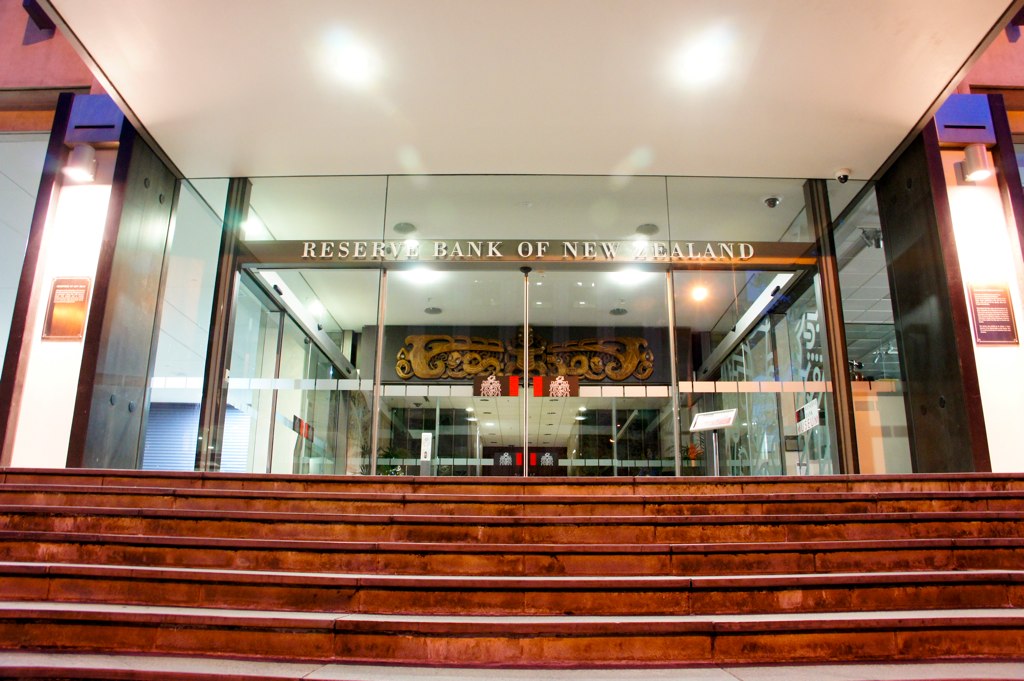
Wellington, where the Reserve Bank held the OCR at 2.25% on 8 April 2026 — a decision that directly shapes mortgage costs for New Zealand households.
Banks face margin pressure in higher-for-longer environment
The higher-for-longer environment could let banks widen spreads between mortgage and deposit rates, boosting net interest margins.
ANZ, BNZ and Kiwibank have not yet detailed plans to adjust term-deposit offerings ahead of prolonged high rates.
ASB has already flagged the risk of sticky inflation persisting.
Mundy noted that once inflation rises it does not often fall back by the same degree.
Once inflation goes up, it doesn't often go back down again by the same degree. I think, in some areas, we could easily be feeling these impacts for a long time yet.
Banks will watch RBNZ signals closely. Any signal of delayed easing supports wider deposit spreads to lock in funding.
The four major banks plus Kiwibank face the same pressure to protect margins while competing for deposits and mortgages.
Households with floating-rate debt bear the direct cost of the delayed recovery in borrowing rates. The next RBNZ monetary policy decision and the upcoming CPI release will be closely watched for any shift in the inflation trajectory that could unlock the rate cuts New Zealand borrowers have been anticipating.