Government to Standardise Treaty References in 19 Laws
Justice Minister Paul Goldsmith announced on 15 May 2026 that the Government will amend or remove references to the principles of the Treaty of Waitangi in 19 pieces of legislation.
Regulation and Markets Conduct Reporter · 15/05/2026 · 15:41 NZT · 6 min read
"Sometimes it's 'honour', or 'have regard to', or 'give effect to', or 'take into account'. We need to create some consistency here, in the interests of increasing certainty and supporting compliance."Paul Goldsmith, Justice Minister
Auckland’s potential $5 billion Fast-track infrastructure exposure and 16,270 wrongly suspended Winter Energy Payments have become the first real-world stress tests of the Regulatory Standards Act 2025.
Cabinet’s Economic Policy Committee has formally authorised public consultation on a prudential levy to shift Reserve Bank supervision costs onto banks, insurers and market infrastructure operators from 2027/28.
Cabinet has agreed in principle to three shifts in public performance reporting sought by the Finance and Expenditure Committee, while parking detailed design and costings until 2027.
Justice Minister Paul Goldsmith announced on 15 May 2026 that the Government will amend or remove references to the principles of the Treaty of Waitangi in 19 pieces of legislation.
The changes deliver on a coalition agreement between National and New Zealand First signed in November 2023.
Goldsmith said the varied wording in existing laws had created inconsistency.
“Sometimes it’s ‘honour’, or ‘have regard to’, or ‘give effect to’, or ‘take into account’. We need to create some consistency here, in the interests of increasing certainty and supporting compliance.”
Cabinet made final policy decisions on 23 February 2026. The Ministry of Justice will now prepare legislation for a full select committee process.
Breakdown of the changes
Treaty reference changes across 19 Acts
Change type
Number of references
Amended to more specific wording
2
Repealed entirely
7
Standardised to take into account
10
Cabinet decisions of 23 February 2026 set the treatment for each reference.
Source: Ministry of Justice; NZ Herald, 15 May 2026
Two references will be amended to more specific wording. Seven references will be repealed entirely. Ten references will be limited to a requirement that decision-makers “take into account” the Treaty.
Affected legislation by sector
The Ministry for the Environment manages changes to the Climate Change Response Act 2002, the Exclusive Economic Zone and Continental Shelf Act 2012 and the Hazardous Substances and New Organisms Act 1996.
The Ministry of Health oversees amendments to the Pae Ora (Healthy Futures) Act 2022, the Mental Health and Wellbeing Commission Act 2020 and the Smokefree Environments and Regulated Products Act 1990.
Stats NZ faces changes under the Data and Statistics Act 2022. MBIE handles updates to the Organic Products and Production Act 2023, the Plant Variety Rights Act 2022, the Taumata Arowai Act 2020 and the Energy Efficiency and Conservation Act 2000.
The Ministry of Education will see changes to the Education and Training Act 2020. Land Information New Zealand administers amendments to the Crown Pastoral Land Act 1998.
Timeline and process
The review began with 28 Acts in September 2024. It narrowed to 23 Acts in May 2025 and then to 19 Acts in February 2026. A Ministerial Advisory Group reported in August 2025.
Seven further Acts remain under separate review processes. The National Iwi Chairs Forum received a letter outlining the proposals in April 2026 and had 20 days to respond.
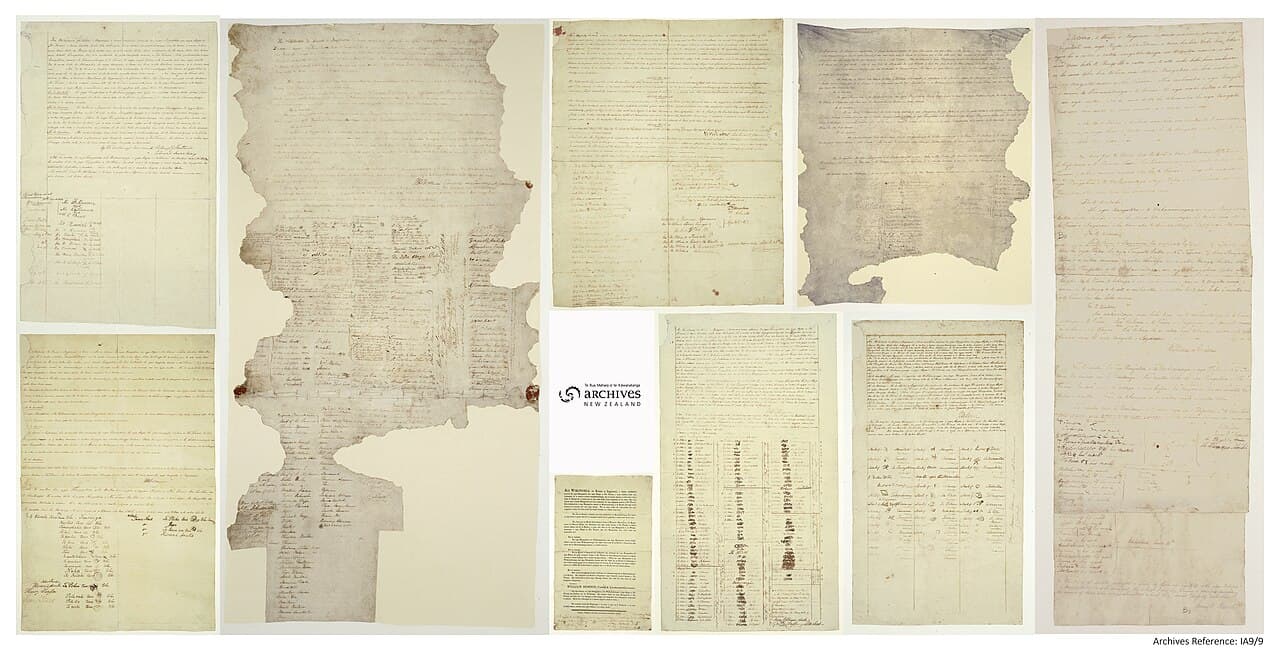
Illustration: The Ministry of Justice will prepare legislation for a full select committee process — the public’s main opportunity to submit on the 19-Act reform package.
Counter-signals
The Waitangi Tribunal has opened an urgent inquiry into the Education and Training Act changes. It described the proposed changes as a potential major breach. Regulatory impact statements viewed by The Spinoff warned of no apparent benefits and significant risk.
Rationale and economic impact
Goldsmith described the announcement as a first step toward greater consistency across the statute book. The changes aim to cap Treaty references at the lowest common standard previously used. Future legislation will refer to both English and Māori texts where appropriate.
The policy is expected to reduce compliance variation for businesses in environment, health, data, water and primary industry sectors. Clearer obligations could lower litigation risk and speed up project approvals for renewable energy, mining and infrastructure.
Stats NZ changes may reduce overheads for private sector data providers. Health sector standardisation could alter how iwi partnership requirements operate in service delivery. MBIE-administered laws affect export-oriented primary industries and water infrastructure. Land Information New Zealand changes touch high-country lease renewals.
Over the next 12 to 24 months the select committee process may generate new guidance on the meaning of “take into account”. Regulators such as the Commerce Commission and FMA will watch for knock-on effects in supervised sectors. The review excludes Treaty settlement legislation and the Treaty of Waitangi Act 1975 itself.