Economic News
Subscribe →
HomeMonetary PolicyFiscalTradeRegulationBankingEconomic DataAbout
Vol. 02 · New Zealand
SATURDAY 23/05/2026
Iss. 2026 / 21
Economic News

Balanced. Independent. Informed.

Sections

  • Monetary Policy
  • Fiscal
  • Trade
  • Regulation
  • Banking
  • Economic Data

Subscribe

  • Free email
  • Email preferences
  • RSS feed

Company

  • About
  • Privacy policy

About

Economic News is an independent New Zealand publication covering monetary policy, markets, the public finances and the wider economy.

© 2026 Economic News Limited
.

OECD Flags New Zealand SME Lending Gap — Economic News
Live
ECONOMIC NEWS NZECONOMIC NEWS NZECONOMIC NEWS NZECONOMIC NEWS NZECONOMIC NEWS NZECONOMIC NEWS NZECONOMIC NEWS NZECONOMIC NEWS NZECONOMIC NEWS NZECONOMIC NEWS NZECONOMIC NEWS NZECONOMIC NEWS NZECONOMIC NEWS NZECONOMIC NEWS NZECONOMIC NEWS NZECONOMIC NEWS NZECONOMIC NEWS NZECONOMIC NEWS NZECONOMIC NEWS NZECONOMIC NEWS NZECONOMIC NEWS NZECONOMIC NEWS NZECONOMIC NEWS NZECONOMIC NEWS NZECONOMIC NEWS NZECONOMIC NEWS NZECONOMIC NEWS NZECONOMIC NEWS NZECONOMIC NEWS NZECONOMIC NEWS NZECONOMIC NEWS NZECONOMIC NEWS NZECONOMIC NEWS NZECONOMIC NEWS NZECONOMIC NEWS NZECONOMIC NEWS NZECONOMIC NEWS NZECONOMIC NEWS NZECONOMIC NEWS NZECONOMIC NEWS NZECONOMIC NEWS NZECONOMIC NEWS NZECONOMIC NEWS NZECONOMIC NEWS NZECONOMIC NEWS NZECONOMIC NEWS NZECONOMIC NEWS NZECONOMIC NEWS NZECONOMIC NEWS NZECONOMIC NEWS NZECONOMIC NEWS NZECONOMIC NEWS NZECONOMIC NEWS NZECONOMIC NEWS NZECONOMIC NEWS NZECONOMIC NEWS NZECONOMIC NEWS NZECONOMIC NEWS NZECONOMIC NEWS NZECONOMIC NEWS NZECONOMIC NEWS NZECONOMIC NEWS NZECONOMIC NEWS NZECONOMIC NEWS NZECONOMIC NEWS NZECONOMIC NEWS NZECONOMIC NEWS NZECONOMIC NEWS NZECONOMIC NEWS NZECONOMIC NEWS NZECONOMIC NEWS NZECONOMIC NEWS NZ
OECD SURVEY · SME FINANCE

OECD Flags Lending Gap Holding Back New Zealand SMEs

New Zealand banks channel only 18 per cent of lending to businesses excluding agriculture, well below the 30 per cent share recorded in Australia at the same point.

Regulation Desk21/05/2026 · 06:11 NZT6 min read
RegulationBreaking
RD
Regulation Desk
Regulation and Markets Conduct Reporter · 21/05/2026 · 06:11 NZT · 6 min read
AI illustration of a New Zealand small business separated from a bank building by a wide gap, representing the SME lending shortfall identified by the OECD

At a glance

NZ banks direct just 18% of lending to business versus 30% in Australia; the OECD urges a credit register and securitisation platform to close the gap.

Key stats

NZ business lending share
18%
excl. agriculture, Dec 2024
Australia business lending share
30%
comparable period
NZ business loans
NZ$128bn
excl. agriculture, Dec 2024
Housing share of bank lending
~60%
Dec 2024
VC raised in NZ
~NZ$600m
2024 vs NZ$50m in 2015
GDP growth projection
1.4%
2026 (OECD)
GDP growth projection
2.3%
2027 (OECD, if reforms proceed)
"The non-performing share of business loans has increased, but is still low compared to previous downturns."Reserve Bank of New Zealand, Financial Stability Report November 2025

Sources cited

  • OECD Economic Surveys: New Zealand 2026 — OECD
  • Sustaining momentum on reforms to strengthen energy security and deepen capital markets will be key to boost New Zealand’s growth — OECD
  • Financial Stability Report November 2025 — Reserve Bank of New Zealand
  • Business Finance Guarantee Scheme — The Treasury
  • Banking industry facts & figures 2024 — New Zealand Bankers’ Association
  • Banks: Assets – Loans by business size (S35) — Reserve Bank of New Zealand
  • Young Company Finance Autumn 2025 — NZ Growth Capital Partners

Free

New Zealand's economy, straight to your inbox.

By subscribing you accept our privacy policy.

More from regulation

A laden container ship navigating a narrow maritime strait at dusk, evoking global shipping chokepoint disruption
Trade · 22/05/2026 · 09:30 NZT

Hormuz Closure Turns Supply Chain Disruptions Into Multi-Year Cost Burden for New Zealand Exporters

Kotahi's 4,000 TEU of dairy, meat and horticulture cargo stranded by the Strait of Hormuz closure shows how New Zealand's geography converts geopolitical shocks into sustained higher costs for primary exporters.

Analysis Desk·22/05/2026 · 09:30 NZT·18 min
Empty rural waste transfer station near Te Anau with beech forest and Fiordland ranges in background
Regulation · 21/05/2026 · 15:37 NZT

WorkSafe charges WasteCo over Te Anau fatality as second death investigated

WorkSafe New Zealand charged WasteCo NZ Ltd on or around May 4 2026 with three alleged breaches of the Health and Safety at Work Act 2015 following the May 2025 death of worker Lynda Marion Kelly at the Te Anau transfer station.

Regulation Desk·21/05/2026 · 15:37 NZT·6 min
Kāinga Ora, Ministry of Social Development and Oranga Tamariki offices in Napier, New Zealand
Fiscal · 21/05/2026 · 13:25 NZT

Social housing rent rise to deliver $387.5m Crown savings

The Government will increase the minimum rent contribution for social housing tenants from 25 per cent to 30 per cent of income from April 2027, lifting weekly costs for around 84,000 households by an average of $31 while generating $387.5 million in operating savings over the forecast period.

Fiscal Desk·21/05/2026 · 13:25 NZT·7 min

All regulation →

New Zealand banks channel only 18 per cent of lending to businesses excluding agriculture, well below the 30 per cent share recorded in Australia at the same point.

The OECD Economic Surveys: New Zealand 2026, released in Wellington on 7 May, highlights this structural shortfall in SME finance.

Banks allocated NZ$128 billion to business lending excluding agriculture as of December 2024. Housing absorbed around 60 per cent of total bank lending over the same period.

This allocation leaves most small manufacturers, trades firms and food producers reliant on high-cost alternatives or personal guarantees.

Business lending as share of total bank lending
New Zealand versus Australia, December 2024 comparable period.
Source: NZBA Banking Industry Facts and Figures 2024; OECD Economic Surveys: New Zealand 2026

Prudential settings and the housing tilt

Reserve Bank prudential settings and capital rules have reinforced the tilt toward housing assets.

The OECD report notes that even the Business Finance Guarantee Scheme, which ended on 30 June 2021 with the Crown taking up to 80 per cent of default risk, failed to shift bank underwriting practices. According to the Treasury's published documentation on the scheme, participating banks continued to require personal guarantees or property security in many cases.

The Reserve Bank of New Zealand noted in its November 2025 Financial Stability Report that while the non-performing share of business loans had increased, it remained low compared to previous downturns. Low default rates have, however, come at the expense of broader credit access.

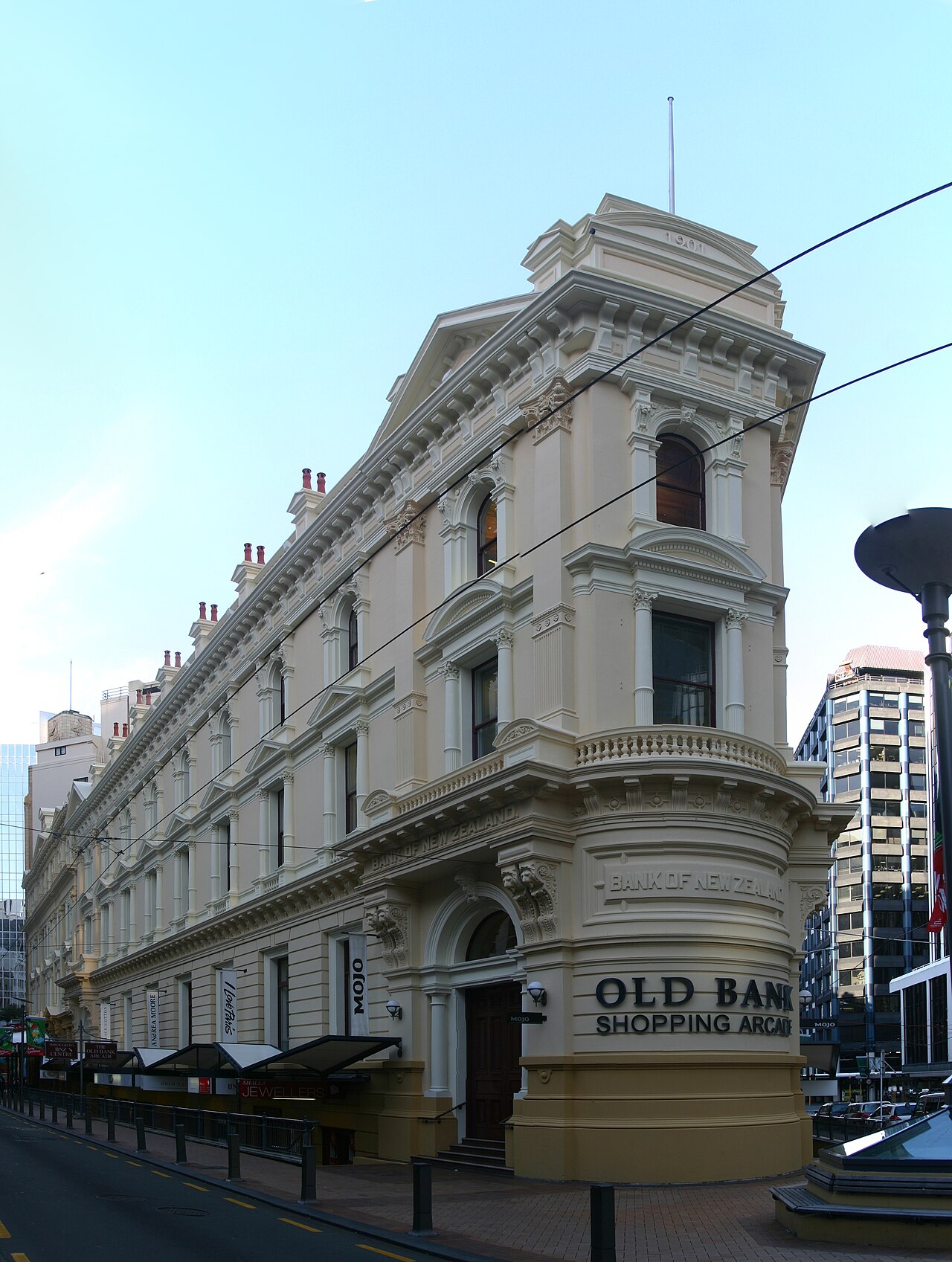
The BNZ Building on Lambton Quay, Wellington. The four major banks — ANZ, ASB, BNZ and Westpac — hold the bulk of New Zealand's NZ$128 billion business loan book, yet direct only 18 per cent of total lending to business, against 30 per cent in Australia.

Venture capital growth masks the missing middle

Venture capital has grown strongly for high-growth tech firms, reaching nearly NZ$600 million in 2024 from NZ$50 million in 2015.

Most SMEs never access equity markets and require debt products instead.

The OECD recommends a national pooled SME loan securitisation platform, a credit register and streamlined private placements to widen funding options. It also calls for revenue-based finance, export working-capital guarantees and SME-friendly procurement rules.

Literacy, productivity and the reform path

New Zealand records high general financial literacy yet lacks a dedicated national programme for SMEs on cash-flow management and pricing.

Productivity growth stays below the OECD average, with capital intensity lagging peers such as Australia and Sweden.

The survey projects GDP growth of 1.4 per cent in 2026 and 2.3 per cent in 2027 if capital-market depth improves.

Over the next three to five years, targeted reforms to ease collateral requirements could free bank capacity for productive lending while reducing pressure on household balance sheets.

Market-led solutions such as securitisation and private placements offer a lower-burden path than further regulatory layering.

The four major banks — ANZ, ASB, BNZ and Westpac — and the Reserve Bank of New Zealand were not available for comment at the time of publication.