RBNZ Must Weigh Pre-Emptive OCR Hike Against Fragile Recovery After Fuel Shock
Markets have repriced a 0.25 percentage point OCR hike in July as almost certain after the Middle East conflict drove sharp rises in global oil prices and lifted near-term inflation expectations.
"The committee stands ready to act with timely and decisive OCR increases if medium-term inflation expectations rise or price- and wage-setting behaviour changes."Governor Anna Breman / RBNZ Monetary Policy Committee
ASB’s Q2 2026 Regional Economic Scoreboard left Wellington joint last with Gisborne while Canterbury led on dairy cash, jobs and retail. The capital’s multi-quarter underperformance is structural: public-service consolidation, a deep housing correction and stalled population growth colliding with a national OCR still set for nationwide inflation.
Economists expect New Zealand’s June quarter GDP to rise just 0.1–0.2 percent when Stats NZ reports on 17 September, a sharp slowdown from March’s 0.8 percent gain as elevated oil prices compress real incomes.
Finance Minister Nicola Willis has refused the Reserve Bank’s first bid to roll $10.1 million of 2025/26 underspend into 2026/27 and published three criteria that will govern every future variation under the 2025–30 Five-Year Funding Agreement.
Markets have repriced a 0.25 percentage point OCR hike in July as almost certain after the Middle East conflict drove sharp rises in global oil prices and lifted near-term inflation expectations.
Markets Reprice July Move
Financial markets now assign near-certainty to a 0.25 percentage point rise in the official cash rate at the Reserve Bank of New Zealand's July 8 meeting. The shift follows escalation in the Iran-related conflict that sent petrol prices up 18.6 percent and diesel prices up 42.6 percent in the initial shock month, according to reporting by Newsroom.
The current OCR sits at 2.25 percent after a series of cuts that began in August 2024 and reversed the peak of 5.50 percent reached in 2023. That earlier tightening cycle lifted rates 525 basis points in response to post-pandemic inflation that exceeded 7 percent.
The Drivers
Higher fuel costs are feeding directly into headline inflation. The March quarter CPI print came in at 3.1 percent, above the 2.9 percent market forecast, according to Stats NZ. Forecasters now expect annual CPI to exceed 4 percent in the June quarter, driven primarily by energy prices.
One-year-ahead inflation expectations in the RBNZ Survey of Expectations jumped 82 basis points to 3.41 percent in May. One-year-ahead OCR expectations rose to 3.01 percent.
The RBNZ held the OCR at 2.25 percent on April 8. Its decision statement noted that near-term inflation is projected to rise sharply while medium-term pressures remain tempered by spare capacity and weak domestic demand.
One-year-ahead CPI inflation expectations vs OCR expectations
May 2026 Survey of Expectations shows a sharp jump in near-term inflation expectations, driving OCR expectations higher.
Source: RBNZ Survey of Expectations, May 2026
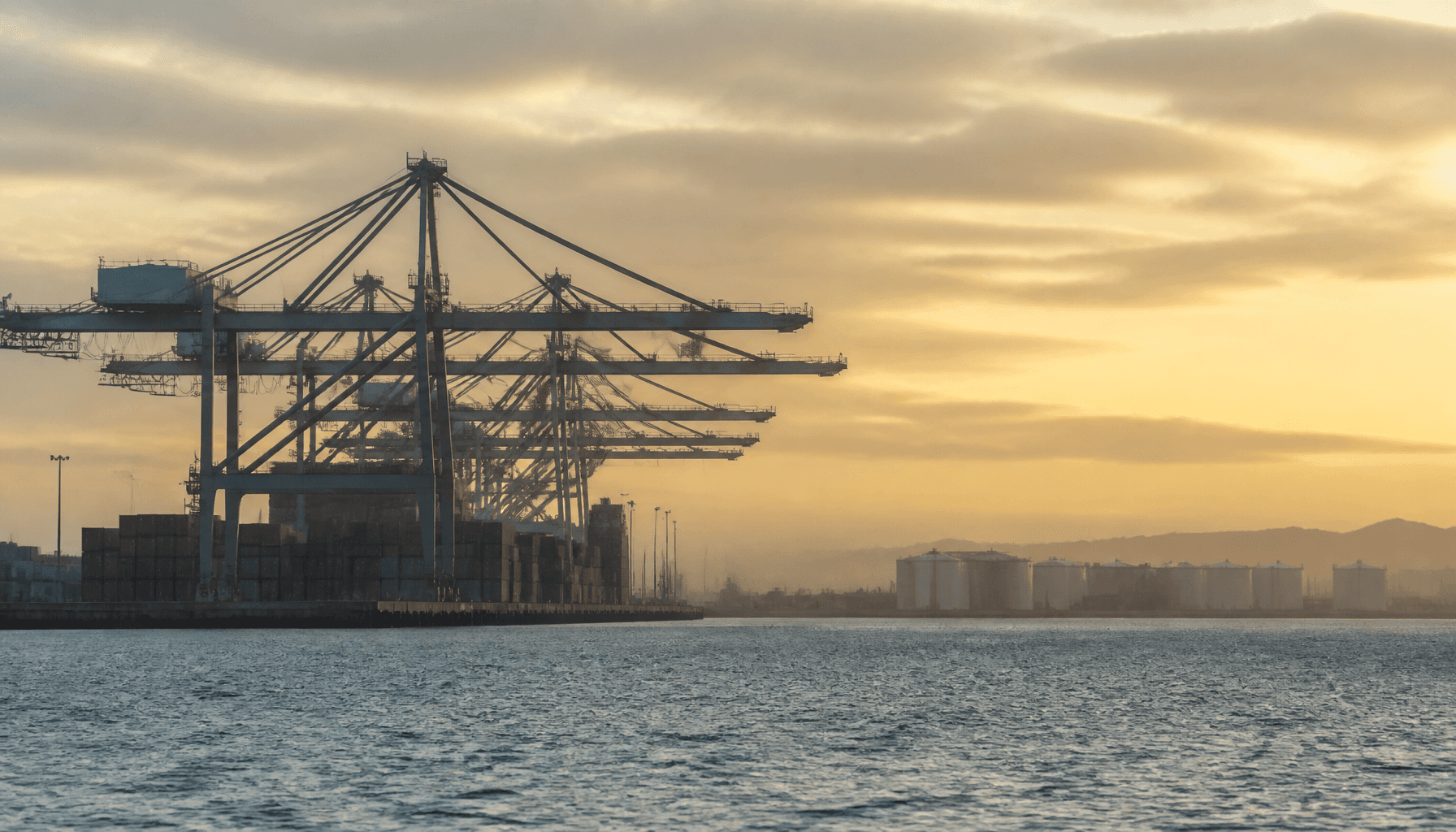
AI illustration of a Wellington streetscape at dusk — a fuel-price shock at the pump collides with the institutional weight of monetary policy, as the RBNZ weighs its first OCR hike in three years.
The Trade-Offs
The Monetary Policy Committee faces a clear dilemma. Acting early to anchor expectations could prevent a wage-price spiral. Waiting risks allowing the fuel shock to become embedded in behaviour.
Governor Anna Breman has emphasised weighing the benefits of acting early against the risk of unnecessarily constraining the economic recovery. According to the RBNZ's April 2026 decision statement, the committee stands ready to act with timely and decisive OCR increases if medium-term inflation expectations rise or price- and wage-setting behaviour changes.
The committee stands ready to act with timely and decisive OCR increases if medium-term inflation expectations rise or price- and wage-setting behaviour changes. — RBNZ Monetary Policy Committee, April 2026 decision statement
Fiscal policy under the current government could interact through Budget settings or targeted relief for fuel costs. Any such support would add to the public debt trajectory and represent further government intervention in markets.
Second-Order Effects
An OCR hike would lift wholesale funding costs immediately. Banks would raise floating and new fixed mortgage rates. This would increase debt-servicing costs for the roughly 40 percent of mortgages on floating or soon-to-reset fixed rates, according to RBNZ financial stability data.
Higher borrowing costs would dampen housing demand and investment. The higher NZD that typically accompanies tighter policy could suppress tradables inflation but hurt exporters.
The labour market shows limited improvement. Unemployment stood at 5.3 percent in the March quarter, down slightly from 5.4 percent prior, with underutilisation at 12.9 percent, according to Stats NZ. Youth unemployment has climbed to 14.4 percent. Past loose monetary policy and high immigration levels have contributed to elevated labour supply, keeping wage pressures contained but leaving many New Zealanders without work.
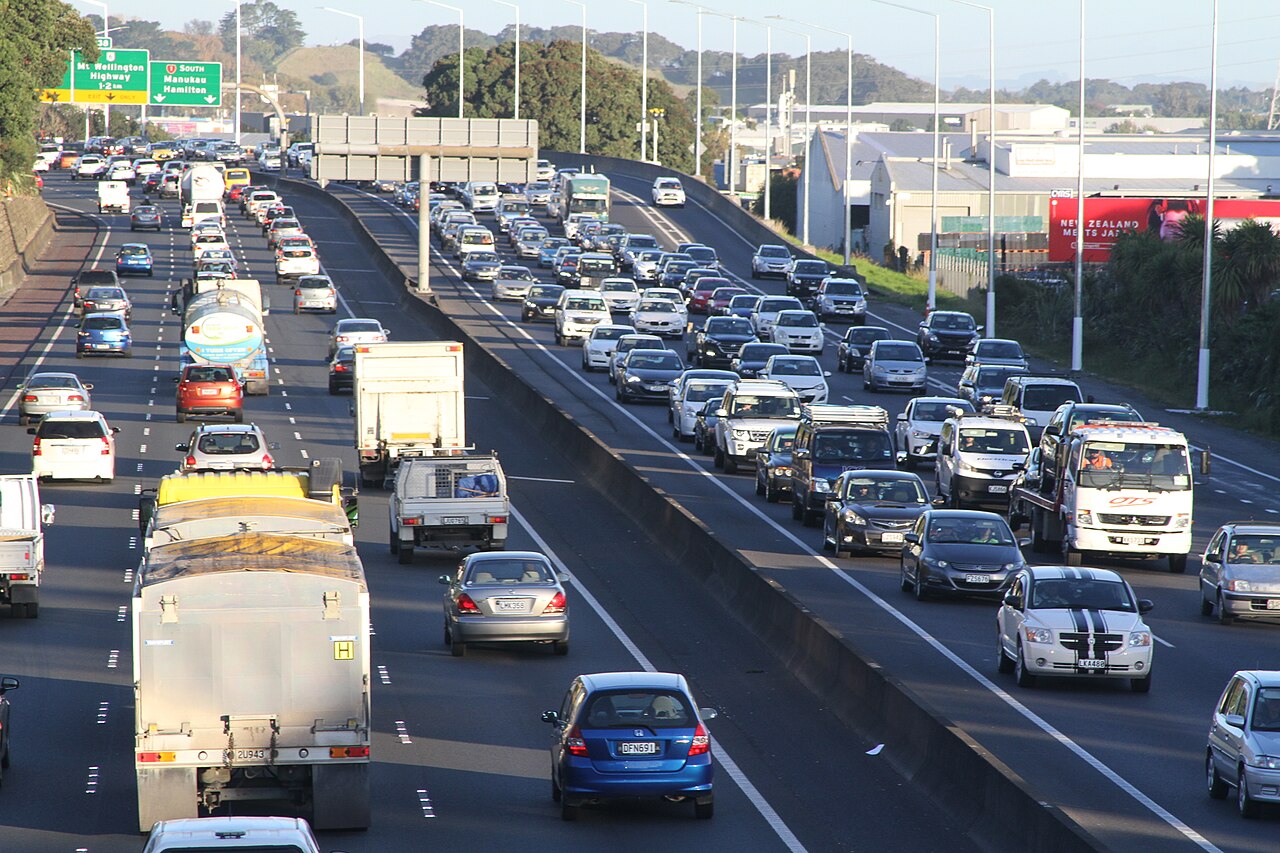
Heavy traffic on Auckland's Southern Motorway — petrol prices surged 18.6% in the initial shock month of the Middle East conflict, feeding directly into New Zealand's headline CPI and accelerating market expectations of an OCR hike.
Historical Context
Since the OCR's introduction in March 1999 the RBNZ has made 209 monetary policy decisions, resulting in 75 adjustments: 40 hikes and 35 cuts. The largest single hike was 0.75 percent in 2022.
Hiking cycles during genuine economic strength in 2002, 2004, 2010 and 2014 delivered average 12-month NZX 50 returns of 15.5 percent and were positive every time. The post-pandemic tightening produced much weaker equity outcomes.
The current environment sits between these regimes. GDP expanded just 0.2 percent in the December 2025 quarter, according to Stats NZ. Annual growth for 2025 was also 0.2 percent.
The Counter-Argument
Some analysts argue the recovery remains too fragile for any tightening in 2026. Westpac's Economic Overview of May 2026 forecasts GDP growth of just 1.5 percent for 2026 and unemployment rising to 5.6 percent.
Treasury's worst-case modelling for prolonged conflict, published in advice to the Finance Minister, shows inflation reaching 7.4 percent, GDP at 0.8 percent and unemployment at 5.7 percent in the June quarter.
Core inflation measures remained firmer than headline in the March quarter at around 2.5–2.8 percent annual. The sectoral factor model estimate stood at 2.8 percent. Non-tradables inflation eased to 3.5 percent.
Open Questions
The May 27 Monetary Policy Statement will be the first full update incorporating April CPI, labour market data and the full Middle East shock. It will reveal whether the RBNZ has revised its OCR track higher and its assessment of second-round risks.
The July review will test whether markets have over- or under-priced the hiking cycle. Incoming data on both inflation persistence and activity resilience will determine the path.
What Households and Businesses Must Watch
The transmission to mortgage holders is direct. Current one-year fixed rates average around 4.5–5.0 percent, according to Interest.co.nz mortgage rate data. Even modest further rises would add hundreds of dollars monthly to repayments for the average borrower.
Businesses report intentions to pass on higher costs. Households anticipate the same. This raises the risk that behaviour itself becomes self-reinforcing.
New Zealand's inflation target remains 1–3 percent over the medium term with a focus on the 2 percent midpoint. Headline inflation sits at the top of the band and is expected to breach it near-term.