Resilient March Arrivals Test Airline Capacity Amid Fuel Shock
New Zealand recorded 358900 international visitor arrivals in March 2026, up 15 percent on the prior year, according to Stats NZ data. Airlines have responded with targeted capacity cuts rather than wholesale reductions while fuel prices remain elevated after the late February Middle East conflict.
"Finance Minister Nicola Willis described the recovery as delayed but not derailed and called the worst case highly unlikely."Finance Minister Nicola Willis
New Zealand rural confidence stayed positive for a ninth straight quarter in August 2026, with horticulturalists overtaking sheep and beef as the most optimistic sector while investment plans stayed soft.
ASB’s Q2 2026 Regional Economic Scoreboard left Wellington joint last with Gisborne while Canterbury led on dairy cash, jobs and retail. The capital’s multi-quarter underperformance is structural: public-service consolidation, a deep housing correction and stalled population growth colliding with a national OCR still set for nationwide inflation.
MBIE’s 6 September snapshot shows 51.7 days of petrol cover on paper. Only 34.5 of those days sit onshore. Eight of nine ships still float outside the EEZ, and sequential Hormuz then Red Sea stress is already priced into $3-plus petrol.
New Zealand recorded 358,900 international visitor arrivals in March 2026, up 15 percent or 47,100 on March 2025, according to Stats NZ. Overseas visitor arrivals reached 3.63 million for the year ended March 2026, an increase of 305,000 from the previous year. Australia supplied the largest gain with 24,100 extra arrivals to reach 138,400. China added 4,200 to 24,600. The United States posted a March record of 53,400, up 4,100. The United Kingdom rose 3,500 to 22,200.
Auckland International Airport chief executive Carrie Hurihanganui told a pre-event audience for TRENZ 2026 that international passenger demand was largely holding up despite the conflict. Airlines have trimmed capacity rather than slashed it. The industry remains in wait-and-see mode ahead of the 19–21 May trade show in Auckland.
International visitor arrivals to New Zealand, March 2026 — top source markets
March 2026 arrivals by key source market, showing year-on-year gains. The United States reached a March record.
Source: Stats NZ International Travel: March 2026
The drivers
Jet fuel prices have traded between US$160 and US$230 per barrel in recent weeks compared with US$85 to US$90 prior to the conflict that began on 28 February 2026, according to Air New Zealand's NZX market update. Fuel typically accounts for up to a quarter of operating costs for New Zealand carriers. Direct flights from New Zealand to Qatar ceased from 1 March. Fewer direct flights operate to the United Arab Emirates. March saw only 1,400 arrivals on direct UAE flights and none from Qatar. Arrivals from the United Kingdom and Germany via those routes fell sharply.
Air New Zealand has executed three targeted capacity consolidations since the conflict began. These moves reduce overall group capacity by 3 to 5 percent, according to the airline's NZX filing. The carrier raised one-way economy fares by NZ$10 on domestic routes, NZ$20 on short-haul international routes and NZ$90 on long-haul routes. It now forecasts a pre-tax loss of NZ$340 million to NZ$390 million for the full 2026 financial year. Second-half fuel costs are expected to reach approximately NZ$980 million compared with NZ$740 million assumed at the interim result. The airline is around 85 percent hedged against its second-half Brent crude exposure.
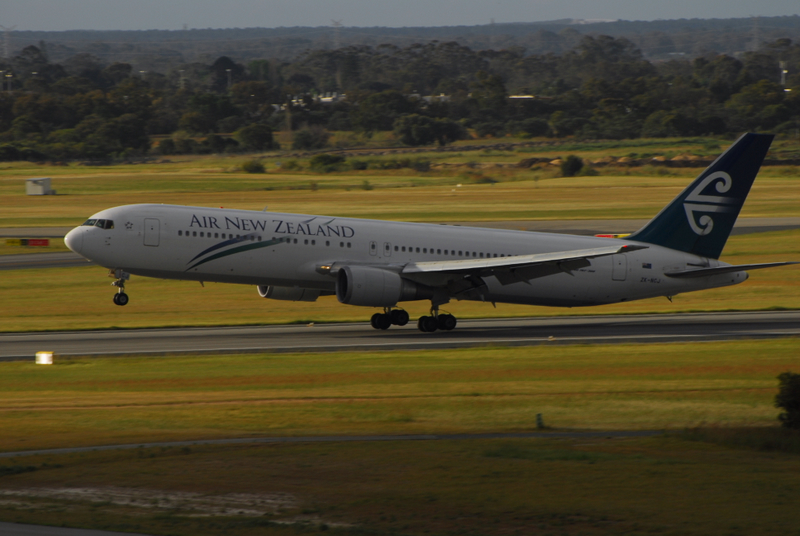
Air New Zealand has made three targeted capacity consolidations since the Middle East conflict began in late February 2026, reducing group capacity by 3–5 percent and forecasting a pre-tax loss of NZ$340–390 million for FY2026. planegeezer · CC BY 2.0 · Wikimedia Commons
Qantas Group forecasts a second-half 2026 fuel bill of A$3.1 billion to A$3.3 billion, up from a prior A$2.2 billion forecast, according to its April market update. The group hedged 90 percent of crude exposure but remains exposed to jet refining margins that surged from US$20 to US$120 per barrel. Qantas and Jetstar extended 5 percent domestic capacity cuts through September 2026 and trimmed some New Zealand trans-Tasman flights. Virgin Australia plans a more modest 1 percent domestic trim for the June quarter and faces extra fuel costs of A$30 million to A$40 million. Some Doha services remain suspended until mid-2026.
The trade-offs
Airlines pass higher costs to passengers through fare increases and modest capacity reductions. Demand in New Zealand's isolated market shows elasticity so far. Stats NZ data confirms arrivals continue the post-pandemic recovery. Yet higher fares and longer routings around Middle East airspace raise questions about sustainability for long-haul markets.
The Reserve Bank of New Zealand faces two-sided risks. Imported fuel inflation could lift consumer prices while slower tourism growth could weigh on economic activity. The central bank is expected to stay on hold at its May 2026 Monetary Policy Statement. Treasury released three oil-shock scenarios in late April. The best case assumes oil near US$110 per barrel and projects inflation at 3.9 percent, GDP growth at 2.0 percent and unemployment at 5.3 percent. The middle scenario lifts inflation to 5.2 percent. The worst case assumes US$180 per barrel and pushes inflation to 7.4 percent, growth to 0.8 percent and unemployment to 6.6 percent by mid-2027.
Finance Minister Nicola Willis described the recovery as delayed but not derailed and called the worst case highly unlikely.
Three scenarios released by Treasury in late April 2026, informing the 28 May Budget.
Source: Treasury oil shock scenarios, April 2026
MBIE activated Phase 1 of the National Fuel Response Plan on 27 March 2026. Supply remains stable with sufficient stocks. Consumption has fallen as prices rose. This government response adds compliance costs for carriers at a time when market signals already encourage conservation. Past experience shows such plans can outlive their usefulness and tie up resources better left to private operators.
Second-order effects
Tourism receipts form a key service export. Pressure on long-haul arrivals could affect the current account. Regional economies in Queenstown, Rotorua and Christchurch may see softer visitor spend if European and United Kingdom bookings soften further. Households face higher costs through the consumer price index where petrol and diesel together represent 3.9 percent of the basket. Petrol prices jumped 18.6 percent month-on-month in March while diesel rose 42.6 percent, according to Stats NZ.
Air New Zealand warned of further capacity updates in coming weeks if fuel prices stay elevated. This could delay fleet renewal and maintenance catch-up already strained by global shortages. Tourism New Zealand may shift marketing emphasis toward closer markets such as Australia and Asia that require less long-haul connectivity.
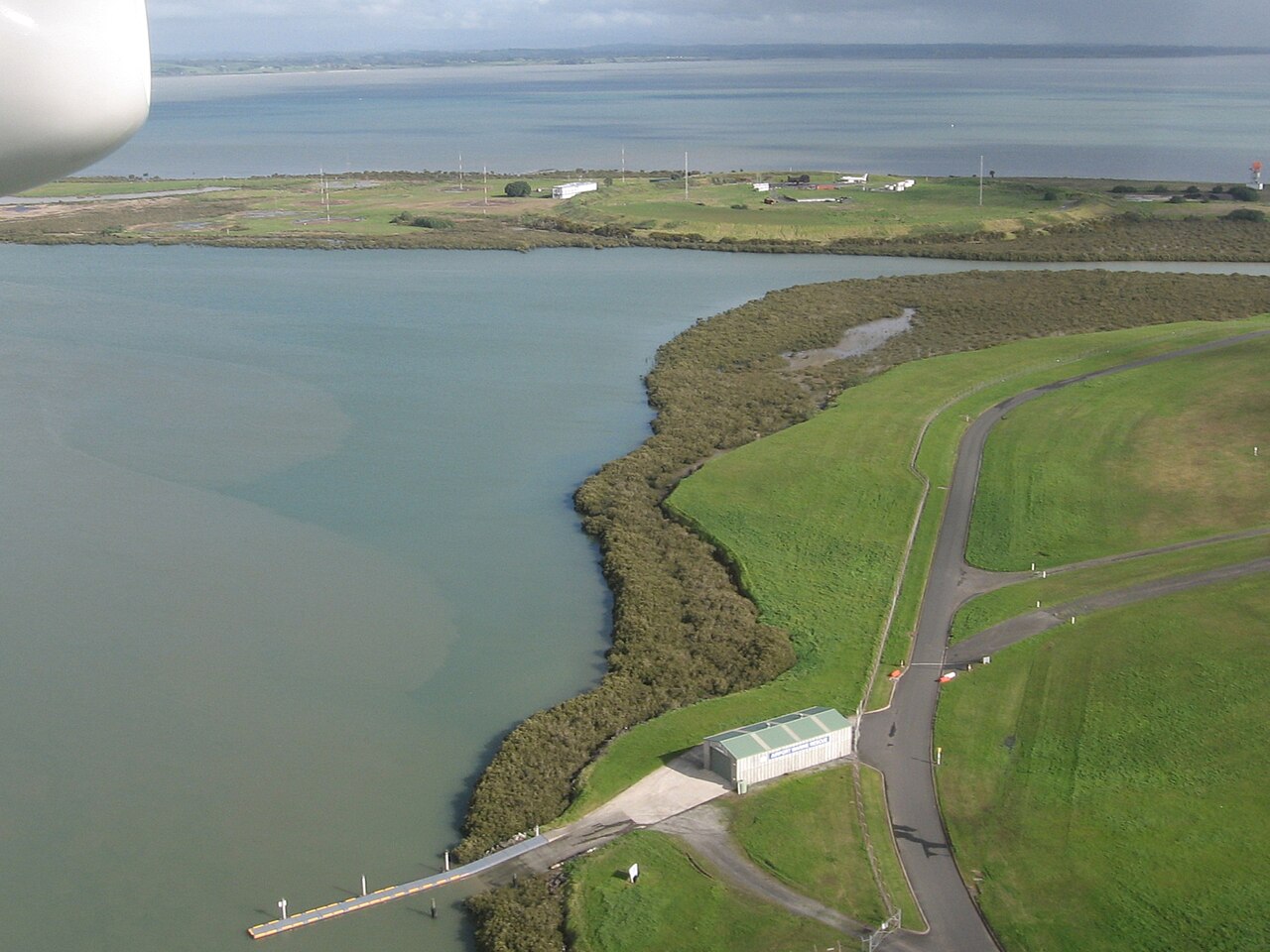
Auckland International Airport, where CEO Carrie Hurihanganui told a TRENZ 2026 pre-event audience that international passenger demand was largely holding up despite the Middle East conflict. Non-transit international passenger movements stood at 93 percent of 2019 levels as of December 2025. Ingolfson · Public domain · Wikimedia Commons
Historical context
The current episode echoes the 2008 oil crisis when Brent crude peaked at US$147 per barrel. New Zealand petrol prices exceeded NZ$2 per litre for the first time then. Tourism and air travel contracted sharply before recovering relatively quickly once prices eased. The 1970s crises produced temporary arrivals dips and prompted conservation measures plus rerouting precedents. Today's situation differs because of lingering post-pandemic fleet shortages and engine maintenance backlogs at carriers including Air New Zealand.
The counter-argument
Headline arrivals growth conceals softening long-haul momentum. Some tourism operators report rising cancellations from European and United Kingdom travellers due to disrupted connectivity via Middle East hubs. Further capacity cuts remain likely in the second half of 2026 if prices stay high beyond the protection of Qantas 90 percent hedge and Air New Zealand 85 percent cover. Auckland Airport interim results showed seat capacity up only 1.8 percent in the six months to December 2025. Non-transit international passenger movements reached 93 percent of 2019 levels. This baseline leaves limited room for further supply shocks.
Open questions
TRENZ 2026 bookings from 19 to 21 May will test whether resilience claims hold. June data releases will show whether fuel costs feed into broader inflation measures. Treasury's worst-case unemployment projection of 6.6 percent could influence fiscal settings in the 28 May Budget update.
New Zealand's tourism sector demonstrates market resilience even as government agencies prepare for unlikely worst-case scenarios. Private operators have adjusted capacity and fares without panic. Continued vigilance on public spending remains essential to avoid adding unnecessary costs during this period of adjustment.