The Coalition has put $3 million of Regional Infrastructure Fund operating money behind the Taranaki Alliance, an industry bid vehicle intended to redeploy oil-and-gas engineering skills as Methanex prepares to idle Motunui from early 2027.
The Government has accelerated the Taranaki Alliance with a $3 million grant from the Regional Infrastructure Fund, Regional Development Minister Shane Jones has announced.
The industry-led hub, run through Te Puna Umanga Venture Taranaki, aims to help local engineering, manufacturing and technical firms secure more than $100 million in contracts over three years. More than 85 firms have expressed interest.
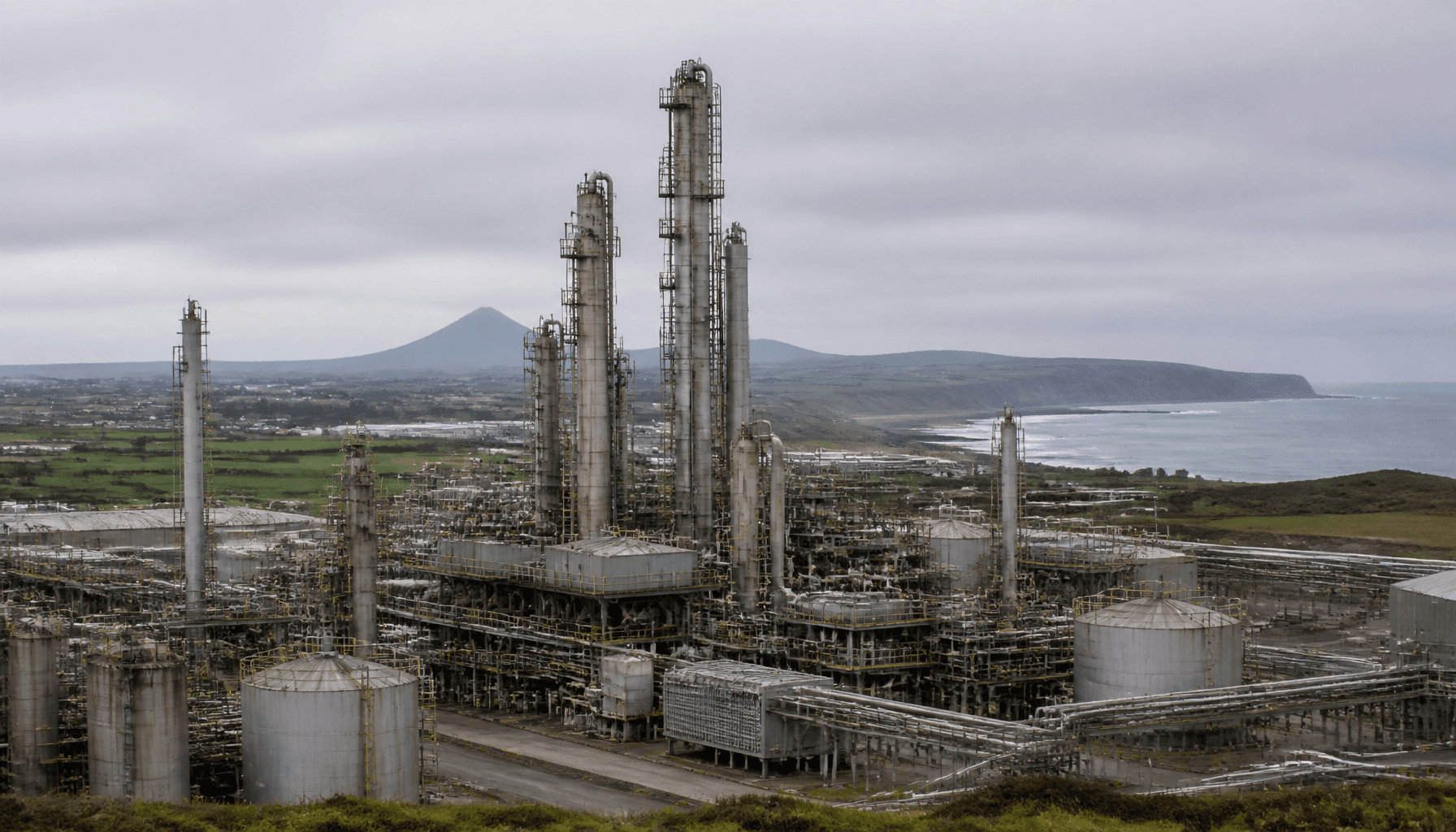
The timing is deliberate. Methanex Corporation said it will sell substantially all remaining New Zealand gas contractual entitlements from the first quarter of 2027 and indefinitely idle its Motunui production facilities in that quarter.
Jones framed the grant as diversification support after oil and gas decline, which he partly linked to previous policy settings, and pointed to Methanex as evidence of regional pressure. The Beehive text cited a loss of 150 jobs; media reports put Methanex New Zealand employment at more than 200 or around 300.
This region has been a powerhouse economy in New Zealand for several decades but that is in jeopardy with the decline in our oil and gas industries due in part to decisions made by the previous government. — Shane Jones, Regional Development Minister
What the $3 million buys
The Regional Infrastructure Fund is a $1.2 billion multi-year programme administered by Kānoa under MBIE. Grow Regions materials describe a mix of capital loans and equity plus operating grants.
The Alliance grant is operating money. It covers lead generation, bid co-ordination, compliance and assurance capability, and a single regional front door—not project capital itself.
New Plymouth District Council approved $500,000 seed funding from its Economic Development Reserve in December 2025. Venture Taranaki is a co-funder. Membership and service fees are expected to support a path to commercial sustainability.
Venture Taranaki's December 2025 modelling, when the council seed was approved, was more ambitious than the Beehive headline. It suggested the region could compete for $100–$200 million of contract value in three years, generating about $77 million in direct regional GDP, retaining around 1,700 skilled roles and potentially enabling further growth over five years. Those remain modelled outcomes, not awarded contracts.
Structural exposure
Infometrics data for the year to March 2025 show why the pivot matters. Mining contributed $1,486.9 million, or 12.8% of Taranaki GDP, against 0.7% nationally. Manufacturing was $1,432.6 million, or 12.3%, versus 7.9% nationally. Agriculture, forestry and fishing remained the largest single primary slice at 14.0%.
Infometrics Quarterly Economic Monitors show softer regional GDP and falling employment of residents even while unemployment stayed below the national average. The year to March 2026 recorded provisional GDP down 0.6% in Taranaki against national growth of 0.4%.
Direct oil and gas extraction is capital-intensive. The dense contractor base—fabricators, maintainers, logistics and specialist services—is the cluster the Alliance seeks to keep intact by packaging bids for infrastructure, defence, energy and civil work.
Methanex idle and gas reallocation
Methanex said continued New Zealand operations were not sustainable given declining domestic gas availability and no clear pathway to meaningful new supply. President and CEO Rich Sumner said the company had been preparing for the outcome and would safely idle and preserve the facility for long-term optionality if conditions later support a restart.
Motunui has two production units with combined methanol capacity of about 5,000 tonnes per day. Waitara Valley was idled earlier. The site has operated at reduced rates and taken winter outages that freed gas for electricity generation.
Genesis Energy secured 11.4 petajoules of gas through to 2029 in the same news cycle, illustrating reallocation of feedstock once locked into methanol. Gas Industry Co supply-demand work has long flagged Methanex among New Zealand's largest gas users and a source of contractual flexibility for the wider system.
Job-loss figures attached to the idle are not consistent across sources. The ministerial release used 150. 1News and E tū references have used around 300; RNZ reporting has used around 200 excluding contractors. Fiscal readers should treat headcount as contested pending company disclosure of the final transition structure.
Parallel energy and defence pipelines
On gas supply, the Government has reversed the path of the 2018 offshore exploration ban and established a $200 million Gas Security Fund. The first loans, up to $23.5 million to Todd Energy for two Taranaki projects, could unlock up to 19.9 petajoules of additional reserves over five to nine years if successful, with gas targeted on stream by end-2027.
That is co-investment to lift delivered molecules. The Alliance grant is separate industrial-policy opex to move skills into adjacent heavy work if hydrocarbons stay scarce.
A concrete near-term procurement pipeline is the New Zealand Defence Force capital programme. Venture Taranaki positions the Alliance against about $12 billion of NZDF capital investment and roughly 80–85 major business cases across 2026–27. The Alliance has signed a memorandum of understanding with UK defence-mobility firm Supacat, with Jones present, covering potential local fabrication, machining, assembly, systems integration and logistics.
Fiscal read-through
For the Crown accounts, the $3 million sits inside the RIF operating slice. Factsheet material for the fund split $900 million capital and $300 million operating over the multi-year package. At 0.25% of the headline $1.2 billion envelope, the Alliance line is small. Its KPI is contracts won and skilled roles retained or redeployed, not construction of Crown assets.
Second-order fiscal effects run through New Plymouth District Council's rates base, PAYE and company tax from the cluster, Port Taranaki throughput, and the national gas balance once Motunui demand exits. Easing petrochemical load may free gas for generators and other industrials while removing an export methanol earner and a flexible demand sink.
Value-for-money will turn on whether membership fees and win rates produce a self-funding model within three years, and whether modelled $77 million direct GDP and multi-thousand job pathways materialise as awarded work rather than contested pipeline. Public operating support for bid coordination can fix a genuine SME scale problem. It does not substitute for commercial wins against NZDF, infrastructure primes and international OEMs.
Watch the first Alliance-led tender results, Motunui transition headcount, Todd Gas Security Fund delivery by end-2027, and whether RIF opex of this type is repeated for other regional industrial clusters—or remains a one-off response to Taranaki's concentrated exposure.