Whey powder prices jump 76% as NZ dairy banks on protein boom
Global whey powder prices rose 76% year-on-year in June, Rabobank data show, as New Zealand processors expand high-value protein capacity on the back of proteinmaxxing demand and GLP-1 weight-loss drugs.
New Zealand rural confidence stayed positive for a ninth straight quarter in August 2026, with horticulturalists overtaking sheep and beef as the most optimistic sector while investment plans stayed soft.
MBIE’s 6 September snapshot shows 51.7 days of petrol cover on paper. Only 34.5 of those days sit onshore. Eight of nine ships still float outside the EEZ, and sequential Hormuz then Red Sea stress is already priced into $3-plus petrol.
Parliament passed the India Free Trade Agreement legislation 93–29 on 16 September 2026. Preferential tariffs await mutual ratification, with Indian officials pointing to mid-to-late October entry into force.
Global whey powder prices were up 76% in June from a year earlier, according to a Rabobank agribusiness report, with spot prices 60% higher from the start of 2026. New Zealand dairy processors are expanding fractionation and bioactive capacity to capture the lift.
Yili Oceania, which owns Westland Milk Products, Oceania Dairy and related businesses, reported 2025 revenue of NZ$1.58 billion, up 14%. Pre-tax profit more than tripled to NZ$58.4 million, the group said in May 2026 results coverage.[[1]](https://www.rnz.co.nz/news/business/594672/yili-s-nz-profits-surge-as-shift-to-higher-value-dairy-pays-off)
The profit gain came even as the farmgate milk price Yili cited rose 30% to $10.16 per kilogram of milk solids. Executive director Zhiqiang Li linked the result to a faster shift into value-added products, capacity expansion and channel development.
Two demand waves are supporting whey and related proteins. Mainstream consumers are fortifying yoghurts, drinks and snacks. Patients on GLP-1 medicines such as Wegovy and Ozempic are urged to raise protein intake to limit lean-mass loss.
Protein boom — headline figures
Whey powder y/y (Jun)
+76%
spot +60% YTD 2026
Yili Oceania pre-tax profit
$58.4m
+3x vs 2024
Dairy exports YE Dec 2025
$24.3bn
+21% y/y
MPI dairy outlook YE Jun 2026
$28.6bn
+5%
Specialty whey strength sits alongside a large NZ dairy export base.
Source: Rabobank via trade coverage; Yili Oceania results; Stats NZ; MPI SOPI
Gallup reported in July 2026 that 11% of US adults currently take GLP-1 drugs for weight loss, up from 3% in 2024. A KFF poll in late 2025 put current use for any indication near one in eight adults. J.P. Morgan has sketched about 25 million Americans on therapy by 2030.[[2]](https://www.forbes.com/sites/zacharyfolk/2026/07/07/11-of-americans-now-take-glp-1-drugs-as-obesity-rate-declines-poll-finds/)
Clinical estimates cited in trade coverage put lean-muscle share of GLP-1 weight loss at 25–40% when protein and resistance training fall short. That clinical guidance has spilled into sports and medical nutrition demand for whey protein concentrate and isolate.
Whey is the liquid left after fat removal and casein separation in cheese and casein plants. Supply cannot jump overnight because it is co-produced with cheese. US and European trade prints in mid-2026 showed tight books and multi-year price spikes in higher concentrates.
The Guardian, citing DCA Market Intelligence, put north-west European food-grade whey powder near a record €1,700 a tonne in June 2026, up more than 50% year to date. Vesper data showed WPC 80% rising from about £4,300 a tonne in mid-2023 to more than £23,000 by mid-2026.[[3]](https://www.theguardian.com/business/2026/jun/09/fears-whey-protein-shortage-weight-loss-drugs-global-demand)
European WPC 80% price path
Concentrate prices tightened far faster than bulk powders over three years.
Source: Vesper data via The Guardian, June 2026
USDA Dairy Market News coverage in late April 2026 had Central and West US WPC 34% mostly in a $1.64–$1.75 per lb band, with some suppliers sold out for the rest of the year. Industry commentary has also flagged fivefold gains in some concentrate prices over recent years.
New Zealand capacity bets
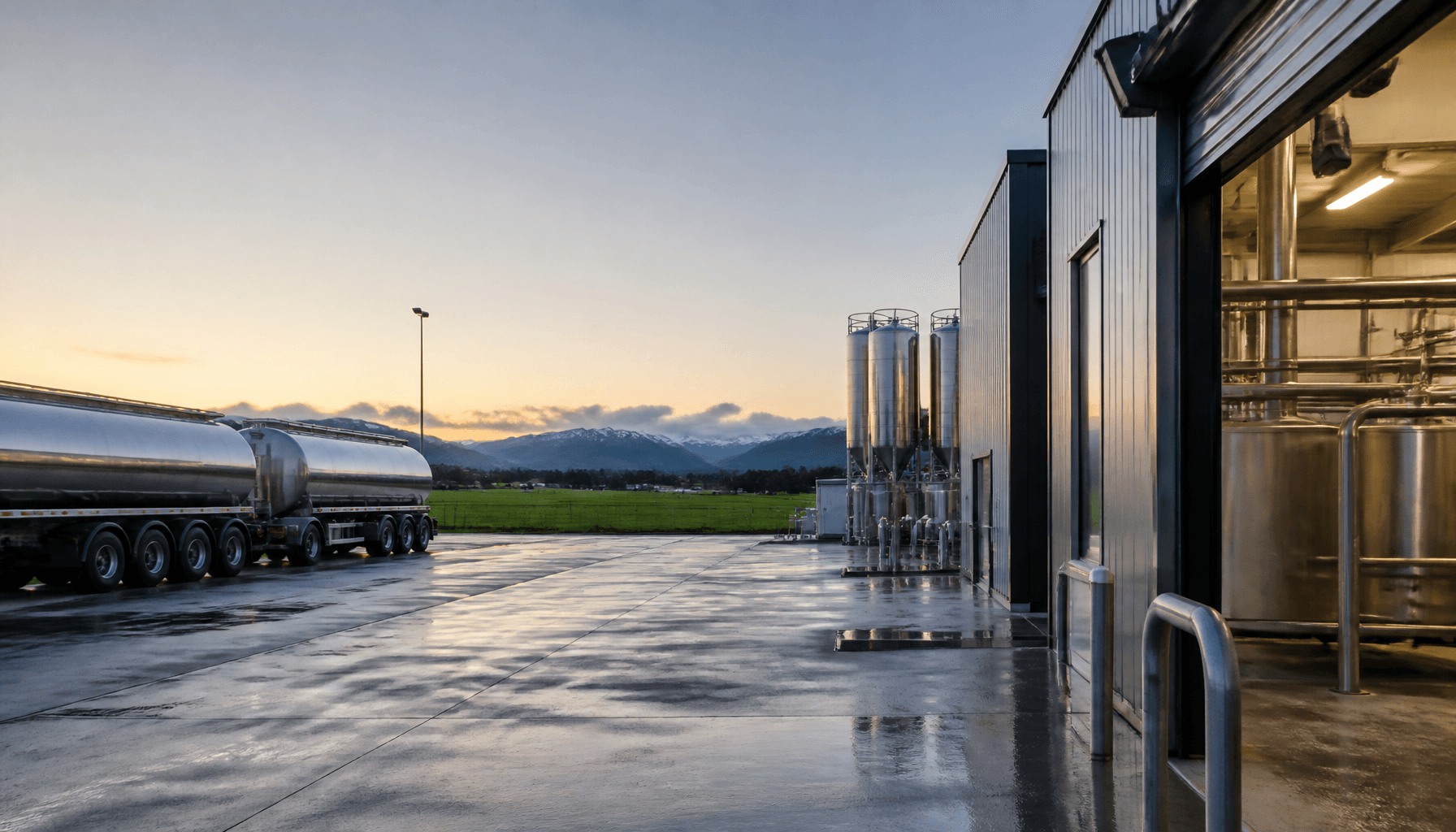
Fonterra is investing about NZ$75 million to turn its Studholme South Island site into an advanced-protein hub. The co-op said first advanced proteins, including WPCs, were scheduled to leave the line in 2026. NZMP already sells MPC, WPC, WPI, caseins and hydrolysates into sports, medical and everyday foods.[[4]](https://www.fonterra.com/nz/en/our-stories/media/fonterras-studholme-site-on-track-for-first-advanced-proteins-to-come-off-the-line-in-2026.html)
Westland Milk Products, bought by China’s Yili Group in 2019, announced a NZ$70 million Hokitika lactoferrin plant in April 2023. The project was designed to more than treble capacity from about 20 tonnes a year and target roughly 10% of the global lactoferrin market.[[5]](https://www.westland.co.nz/news/70m-west-coast-investment-to-secure-westland-as-global-dairy-leader)
Yili Oceania said in 2025 results that it had commissioned a second lactoferrin plant at Hokitika, making the site one of the world’s larger lactoferrin facilities, plus a third Westgold butter line. Westland was still advertising West Coast roles as of August 2026 coverage of the protein surge.
By accelerating the shift towards value-added products, we achieved record-high revenue and profit, while also making tangible progress in capacity expansion, operational efficiency and global channel development.
Zhiqiang Li, Yili Oceania executive director, said of the 2025 result.
Waikato biotech Quantec sells branded IDP whey fractions—lactoferrin, lactoperoxidase, immunoglobulins and minor bioactives—mainly into China supplement channels, with growth aims in Taiwan, Japan and the US.
Export base and milk price backdrop
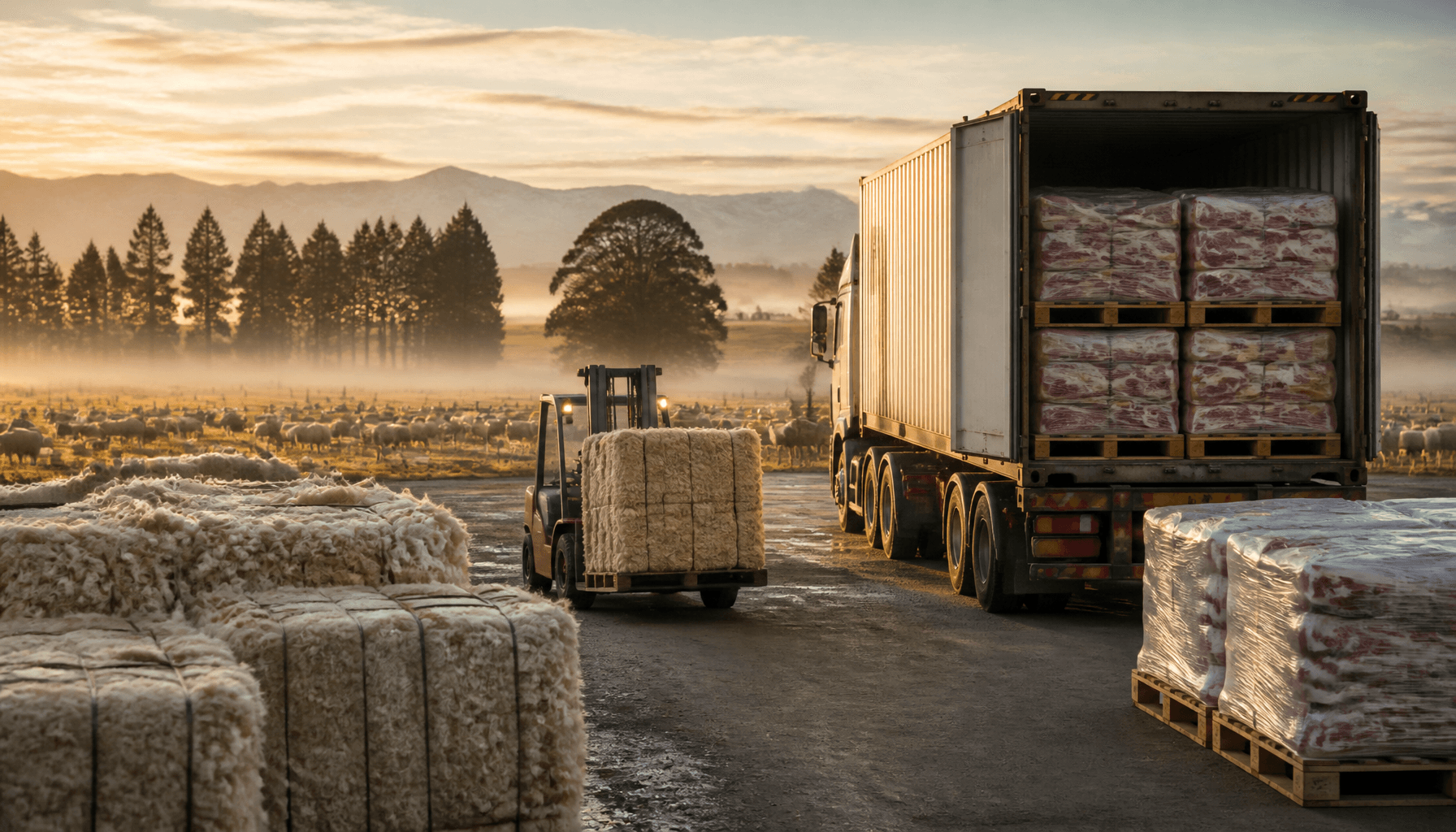
Stats NZ recorded milk powder, butter and cheese exports at $24.3 billion in the year ended December 2025, up $4.2 billion or 21%. That group was about 30% of merchandise exports as the national total hit $80 billion.[[6]](https://www.stats.govt.nz/news/new-zealands-annual-exports-reach-80-billion/)
NZ dairy export markers
Calendar-year goods print versus MPI June-year revenue outlook.
Source: Stats NZ; MPI Situation and Outlook for Primary Industries
MPI’s Situation and Outlook for Primary Industries pointed to dairy export revenue of about $28.6 billion for the year to June 2026, up 5%, inside a record $64.3 billion food-and-fibre total. USDA FAS notes about 95% of New Zealand milk is exported and a multi-year mix shift away from whole milk powder’s share of export volume.[[7]](https://www.mpi.govt.nz/resources-and-forms/economic-intelligence/situation-and-outlook-for-primary-industries)
CLAL trade data show New Zealand whey powder (HS 0404) exports at 69 thousand tonnes in January–June 2026, versus 62 thousand tonnes a year earlier, an 11.3% rise. Full-year volumes in 2024 and 2025 were around 118–119 thousand tonnes.
Fonterra’s 2025/26 forecast farmgate milk price midpoint stayed at $9.70 per kgMS. The co-op later cut its 2026/27 opening midpoint to $9.25 after softer Global Dairy Trade prints, underscoring that protein premiums sit inside a still-cyclical bulk complex.[[8]](https://www.fonterra.com/americas/en/our-stories/media/fonterra-revises-its-2026-27-forecast-farmgate-milk-price.html)
Bulk GDT whole and skim milk powder prices have not moved in lockstep with specialty whey. Some manufacturers blend other milk proteins to stretch scarce whey. Plant-based and precision-fermentation proteins remain longer-term competitors.
Global peers are adding capacity. Trade reports cite multi-billion-dollar US cheese and whey programmes, FrieslandCampina’s Wisconsin Whey expansion, Tirlán’s premium whey facility and Glanbia joint-venture WPI tonnes into 2027. Australian coverage has described US buyers seeking southern-hemisphere whey as a rare bright spot for local farmers.
For New Zealand households and regions, higher realisations on whey, WPC/WPI and lactoferrin support export receipts and factory jobs in places such as Hokitika, Studholme and Waikato. Farmgate gains depend on how component incentives and processor margins share the premium when bulk powders soften.
Risks include China concentration for infant and immune ingredients, energy and emissions costs at large processing sites, and uneven pass-through from specialty prices to the average farmer cheque. Cheese made mainly to harvest whey could pressure cheese markets if the cart drives the horse too far.
If GLP-1 penetration and protein fortification keep rising on the path implied by US usage polls, New Zealand’s grass-fed brand and existing fractionation investments leave the sector well placed to lift revenue per litre—provided capacity, logistics and market access keep pace with demand.